Welcome

Welcome to my self-indulgent location for the stories (good and bad) that I can't prevent myself from writing. All comments and criticisms welcome. I post on Tuesdays and Saturdays.
Showing posts with label voice. Show all posts

Friday, April 1, 2011

Acorn (#atozchallenge)

Welcome to my 1st post on the A-to-Z Blogging Challenge. My challenge, as I have chosen to accept it, is thus: I have asked on my Facebook and Twitter accounts for people to contribute random words beginning with the letter A (as well as B, C, etc.). From Random.org, I have selected one of these words, and will below challenge myself to connect said word to writing.

For the letter A, I received 46 suggestions. Random.org selected number 33: Acorn.


Acorn
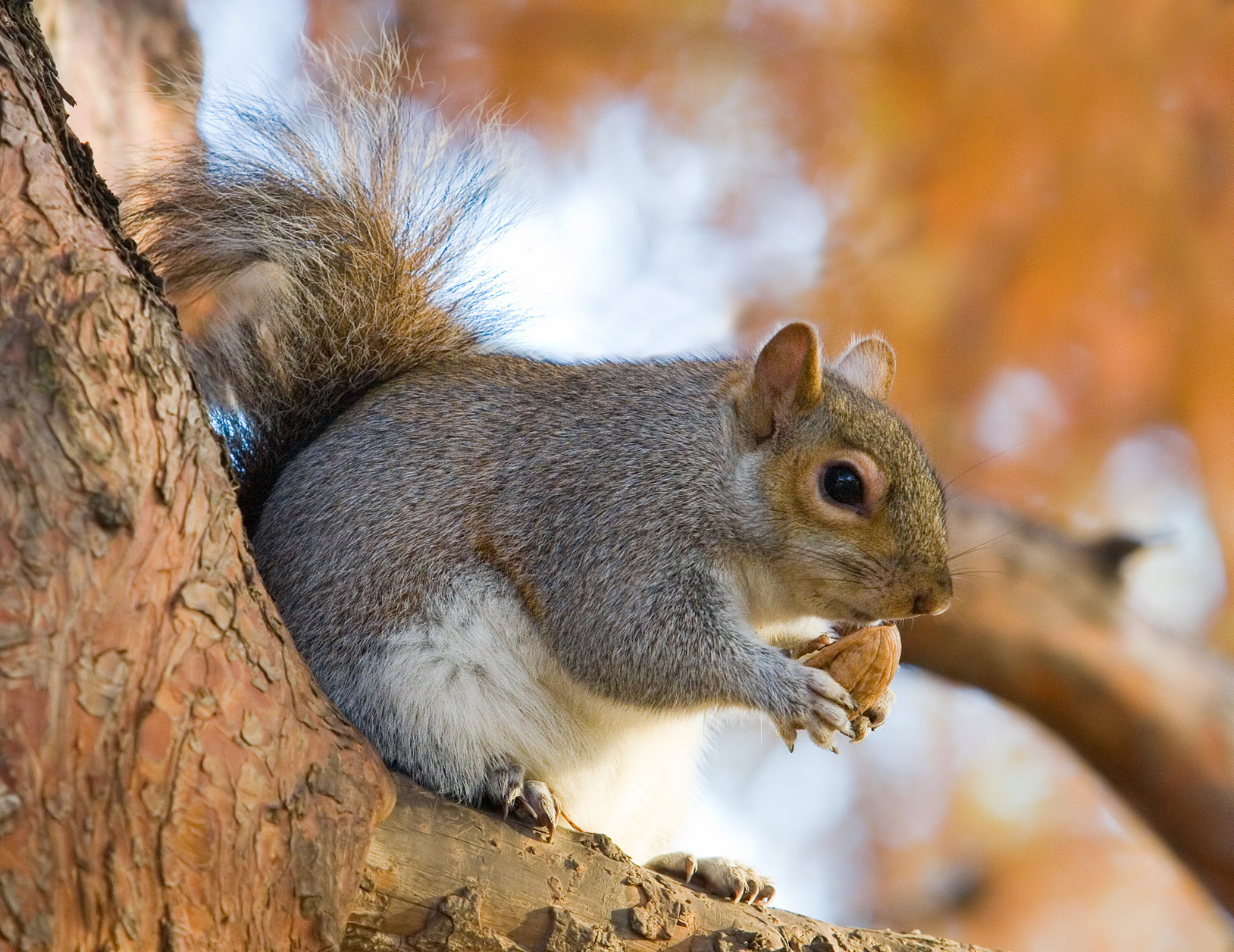
Image courtesy of Wiki Commons
I love squirrels.

I realize that I am in the minority of the population with this, as they rummage through planters, dig holes in the middle of your lawn, and potentially drive your pets (dogs, cats, iguanas, etc.) berserk with their romping and their erratic tail-flipping.

But just take a moment to consider the life of a squirrel. A squirrel's average life span is six years (source), and so they've got jam pack their lives with food and fun (and probably work on that whole continuation-of-the-species schtick, but that's beside the point).

Now, squirrels can't eat cellulose (i.e., the green in plant leaves), and need food full of protein, fat, and carbs (just like us, unless you're on Atkins) (source). Squirrels spend the summer months storing food so they can survive the winter, burying several sources of food--among them, the acorn.

Why's the acorn so great? As any seed, it's high in protein, but it's also high in fat to help keep those little rodents warm through the winter. It's packed with all the good stuff squirrels need for endurance through the cold, winter months. An acorn has all the vital goodness a squirrels needs in order to be successful in its main purpose--survival.

And this relates to writing... How?

Image courtesy of Wiki Commons
Let's talk about the acorn as a story idea.

What's necessary in that little acorn to make a successful story? Well developed characters (the main building block, i.e., the protein) and a plot with continual rising tension (the slow-burning endurance, i.e., the fat).


This is getting a little foodie. Anyone else hungry?

This tiny little seed with a cute hat can sustain the squirrel for a long time. A good idea, rich with character and plotty goodness, can lead the writer to beautiful novel, short story, poem, or even song lyrics. The build blocks are there. It's up to the writer to use them.

Sure, writing takes so much more than the seed to be successful. It takes the endurance to get through the winter (drafting, editing, honing style, discovering voice) and the early spring (querying) to get to the beautiful summer. With that endurance, which can come with the writer's belief in the strength of that little acorn, and faith in one's self, we can all make it to summer.


What do you do with your acorns? Do you have an ideas file? A notebook in your back pocket? A hole in the tree in your backyard where you hide them?

PS--I am also taking suggestions for the letter D. Got any? Leave them below. Thanks!

Monday, February 14, 2011

Voice Redux

BLOGFEST ANNOUNCEMENT:

In an effort to promote the HONE YOUR SKILLS Blogfest, Charity and I will be hosting a few different guest posts over the month. Be sure to drop by this Friday for a post from Theresa Milstein, and next week from Hart Johnson.

* * * *

On Thursday, I had a frustrated/frustrating moment, when I revealed to you all my sheer inability to convey voice in 3rd person limited (although I wrote "omniscient", as my frustration overwhelmed the synapses between the cells in my brain).

You were all awesomely supportive, and I thank you all for your thoughts. Through the various comments and thoughts, I realized a few things that might help in developing a 3rd person limited voice. And, well, it would be highly unfair of me to keep it to myself....

So a 3rd person limited narrator whose voice is true both to the personality of the character as well as the narrator itself. I can't tell you which voice is easier to come by, but if you feel like you have a strong voice on your blog—not sure why this never sunk in with me before—then you've got a good start.

Synthesizing your voice with the character's voice is the next step. In order to do this, you need to have a good sense of the character's voice. A good way to do this is to write a few scenes in 1st person, even if those scenes will never see the light of day.

Of course, creating the actual synthesis is another task. Unfortunately it's not one I've had a chance to try my hand at since Thursday (I promise—you don't want to hear about how much work-life exploded into 80-90hr weeks). However, a few good examples:
  • Harry Potter: JK Rowling follows Harry through seven years, and the voice is true throughout each book. 
  • The Hating Game by Talli Roland. I can't begin to tell you how impressed I am with her skills with voice. I'm barely finding time to sneak in a few minutes with my Kindle App, but I can't wait to read it again. So far, the narrator has been close to three characters. With each character, the voice of the narration adjusts to personality of each character, but the narrator's voice is always there, too.

Does any of that make sense, or is it still too hypothetical?

What books have you read with great 3rd limited voice?

Thursday, February 10, 2011

Voice

Yes, I already hear you groaning. Don't worry. I'm groaning, too.

It is the most unexplainable je-ne-sais-quois crucial ingredient to a book getting picked up by an agent or publisher, of a short story getting sold to a journal, or creating a compelling read in general. Yet no one can explain it. You've either got it, or you don't.

*more groaning*

Okay, fine. I'll concede that it's either there or it's not. But there are different ways to develop voice. It does exist, and we all have it, but we have to find a way to get it out there.

Let's start with the 1st person voice. I think it's easier—for me—to accomplish a compelling voice in first person. I imagine the narrator as an actual person, which is far from daunting since the narrator is also a character with a backstory and a personality. In other words, s/he has a voice of her/his own, and this comes out in the narration.

When I started writing again, most of what I wrote was in 1st person. Perhaps this was the path of least resistance—and may also be the reason why writing instructors prefer 3rd person—but it worked, sort of. Maybe the voice wasn't great (trust me, it really wasn't), maybe it was inconsistent, but it was there sometimes. And with some work, I could bring it out more and more.

Here's the problem: I recently decided, for various reasons, that one particular novel should be in 3rd person instead of 1st. I need to be able to track more than just the MC through her travels. (I could, potentially, have two 1st person narrators, though I'm not sure how I feel about that.) So I chose to try my hand at 3rd person and rewrite.

And the voice................. disappeared.


Me--------------->


So my question(s): If a 1st person narrator's voice can be developed through the character his/herself, how does one develop a compelling 3rd person omniscient narrator? These narrators are amorphous, misty creatures, based solely off a voice that comes from the nether-regions of our imaginations. But who ARE they? Are they characters? My HS English teacher would say "yes". How do you define them? How do you create them in such a way to give them that je-ne-sais-quois factor, which is in and of itself amorphous and particularly misty?

I'm clearly missing something, but creating an amorphous, misty narrator with an amorphous, misty, je-ne-sais-quois voice seems... well, nothing is impossible or we'd only ever read 1st person literature.

What am I missing, folks? Please help me uncover the secrets to a compelling, 3rd person voice.
Related Posts with Thumbnails