Welcome

Welcome to my self-indulgent location for the stories (good and bad) that I can't prevent myself from writing. All comments and criticisms welcome. I post on Tuesdays and Saturdays.
Showing posts with label review. Show all posts

Tuesday, December 6, 2011

Review: Murder Most Trivial

A few months ago, I won this on Goodreads. I don't normally read mysteries, but this one touted itself as a YA mystery. With fond memories of Nancy Drew and the Hardy Boys, I though, why not? Upgrade the mystery (I'm pretty sure Nancy never investigated serial murderers), and it should be a pretty good read, right? Ideally...

The Blurb (from Goodreads): Murder, is that your final answer? High school senior Jason Greevey seems to think so. When winning contestants from a local restaurant's trivia contest begin turning up dead, runner-up Jason worries that he will be the next weakest link!


Now, I'm not one to look down on self-published novels. In fact, I've read my fair share (by Michelle Davidson Argyle, Allen Russell, Carol Riggs, among others). They generally have to be judged within their own category, and not in comparison with books edited by agents and publishers who rip books to pieces (for the betterment of the book, of course) for a living.

And, yes, I checked. This book was published by DPL Books in VA. I found their blog, and their listing on a self-publishing consortium. Honestly, I didn't even find a company website. Beyond those, it was mostly links for Twitter, Facebook, LinkedIn, etc. I find this odd.

But I digress...

Unfortunately for L. K. Ellwood, all those other self-pub'ed books left this one in the dust. Overwrought with typos and factual errors, this book floundered on its way to finding the end-game--which I had difficulty believing. I found myself skimming way too often as I had to read random bits of backstory about minor characters who hardly play a role (e.g., I don't need to know that Mrs. Rice somehow managed to run all of the volunteer committees at church while raising 5 kids when she only appears in a phone call and the final scene of the book). What this story needed was a good editor, and I don't necessarily mean from the publishing house. The author needed a solid, tooth-and-nails critique partner or set of critique partners who weren't afraid to rip the story apart. It's really too bad that this author didn't have have one (or several) to point out that, for example, a morning newspaper goes to press well after the 11pm news, or that a person who has designated herself as an organ donor would not have anything taken from her if she died from an allergic reaction to drugs administered in the hospital.These are only a couple of several examples of factual errors, not to mention the list of typos and awkward turns of phrase that appeared on almost every page.

Oh, and did I mention the constant head-jumping? At one point, the POV changed so frequently between father and son that I no longer knew who the "he" was. Even mid paragraph the shift in POV would occur. Extremely disconcerting.

The bottom line: Don't bother unless you're sending a heavy list of edits to the author. And since the pub date is from 2002, I doubt she wants to see any.

By the way, I'm not only planning on complaining. Stop back on Saturday for some of my thoughts on the temptations involved in self-publishing.

Friday, November 18, 2011

Review: String Bridge

If you don't know Jessica Bell from her blog, I suggest you check it out, or at least read my interview with her from a couple of weeks ago. She's a great person, a talented musician, and a fabulous writer. So when I got a notice saying I could sign up for her blog tour and get an ARC of her new book, String Bridge, I jumped at the opportunity.

The Blurb (from Goodreads): Greek cuisine, smog and domestic drudgery was not the life Australian musician, Melody, was expecting when she married a Greek music promoter and settled in Athens, Greece. Keen to play in her new shoes, though, Melody trades her guitar for a 'proper' career and her music for motherhood. That is, until she can bear it no longer and plots a return to the stage--and the person she used to be. However, the obstacles she faces along the way are nothing compared to the tragedy that awaits.


Melody's struggle follows a difficult trajectory, one that the reader struggles through with her. At almost every step, I found myself feeling the same emotions felt by Melody, wanting her to do the things she wanted to do--even when they weren't the best choices for herself or her family. I identified with Melody throughout the entire novel, fighting and crying and yelling when she did.

I love the way that Bell develops her characters. Each of them felt like a real person that could have stepped out of my own life and settled into print. I especially loved the way Melody's daughter, Tessa, came to life, as I think it's sometimes difficult to capture the wonder and excitement of children. In this case, I never once doubted the authenticity of the little girl's voice.

Another aspect of the book that I loved was reading Melody's songs. It's wonderful that Bell is such a talented artist, in that she both writes beautiful prose and beautiful music. A soundtrack to the book is also available (from iTunes, Amazon.com, Amazon UK).

String Bridge is a wonderful, heart-wrenching read. Anyone who enjoys a strong, character-driven novel should not hesitate to pick this up.

Bottom line: Read this book!


Also available from Barnes and Noble.

Jessica Bell is a literary women's fiction author, poet and singer/songwriter who grew up in Melbourne, Australia, to two gothic rock musicians who had successful independent careers during the '80s and early '90s.

She spent much of her childhood travelling to and from Australia to Europe, experiencing two entirely different worlds, yet feeling equally at home in both environments. She currently lives in Athens, Greece and works as a freelance writer/editor for English Language Teaching publishers worldwide, such as HarperCollins, Pearson Education and Macmillan Education.

In addition to String Bridge, Jessica has published a book of poetry called Twisted Velvet Chains. A full list of poems and short stories published in various anthologies and literary magazines can be found under Published Works & Awards, on her website.

From September 2012 Jessica will be hosting the Homeric Writers' Retreat & Workshop on the Greek island of Ithaca, home of Odysseus.

Monday, November 14, 2011

Review of Exiled

I'm super excited today to tell you about RaShelle Workman's new novel, Exiled, as a part of the Dark C.A.R.MA Blog Tour.

The Blurb (from Goodreads): Stubborn, sixteen-year-old Princess Venus of Kelari wants one thing, to become a kelvieri, that is, until someone exiles her to Earth, kills her irrihunter and takes her family.

Now she wants revenge.

First she’s got to get home. But before she can return to Kelari, the Gods have commanded her to help an arrogant boy named Michael find his soul mate. Only she doesn't know the first thing about love.

Rather quickly, her inexperience with human emotion is obscured by other matters—alien-controlled psychotic teens that are out to kill her, and a government group that is set on capturing and dissecting her.

Worst of all, Venus will suffer a painful death-by-poisoning, thanks to Earth’s atmosphere, if she remains on the planet longer than one week. Still, Venus is a Princess and she's got a plan. Surely, with her help, Michael will fall in love with a human.

But time is running out and Michael is falling for the wrong girl—her.


What a fantastic read! For days, I didn't want to put it down (though life got in the way). I found myself mentally enveloped in Venus's world, thinking about it whenever I couldn't be reading. Her journey and struggle capture the imagination long after the story ends.

Workman develops a fascinating world of upheaval and betrayal that force Venus into exile on Earth. Workman's prose donates extra flare to the story, weaving together vivid images of setting and characters. And her exceptional storytelling seizes the reader and doesn't let go.

My only complaint about this book is that it's a part of a series, and I have to wait to find out what happens next. I'm not exactly known for my patience.

Recommendation: Read this. It would make a great holiday gift for anyone who loves a good fantasy novel.


RASHELLE WORKMAN lives in Utah with her husband, three children and three dogs. When she gets a quiet moment alone, she enjoys reading about faraway places. And, in case you were wondering, yes, she does believe there is other life out in the Universe.

Wednesday, October 12, 2011

Review of MONARCH by Michelle Davidson Argyle and Contest Winner!

My first ARC came in the mail a few months ago, before my move and my new job and everything else that caused social upheaval in my life. "Giddy" doesn't have enough force behind it to describe how I felt when I tore open the package and found my very own copy of the novel in my hands.

And it only got better from there. But I'm getting ahead of myself.

The Blurb (from Goodreads): Nick's life as a CIA spy should be fulfilling, but it has only given him unhappiness, a wife who committed suicide, and two daughters who resent everything he has become. Now, stuck in the Amazon on the last mission of his career, he must track down Matheus Ferreira, a drug lord and terrorist the United States has tried to bring down for years. If he succeeds, he'll have the chance to start his life over again. Just when he's on the brink of catching Ferreira, he's framed for a murder that turns his world upside down. His only chance of survival lies in West Virginia, where Lilian Love, a woman from his past, owns the secluded Monarch Inn. He's safe, but not for long.


Okay, let me try to explain my experience with this book. You know how, when little kids get a piece of candy that they love, they eat it and swallow it so quickly that an observer isn't even sure they tasted it? They didn't savor the gooey chocolate or the refined nugget core. But the love of it just inspired them to INHALE the candy.

*cough*

Yes, this was me with MONARCH. Not because I knew I would like it before it landed in my hands, but because with every page, I enjoyed it more. It grew to the point where I couldn't stop reading. It became compulsive. And like all good things, it was soon over. Maybe 48 hours later? Too soon, that's for sure.

And after having devoured the novel, I remembered, "Oh, right. I agreed to write a review."

So, in order to write something of more substance than "Dude, this novel ROCKED!", I decided to read it again. Not a hard decision, really, seeing as I enjoyed it so much the first time. And guess what happened.

Yup, I devoured it again.

So, clearly, this says something in its own right about MONARCH: it's a fast-paced, edge-of-your-seat thriller that is unput-downable. All of the characters went straight to my heart as soon as I opened the cover, and all I wanted was for everyone to survive. Davidson Argyle weaves tension like an expert loomist, with almost every scene inspiring nail-biting reactions. "Real" time and flashback move seamlessly back and forth, creating a vivid full picture.

On top of it being a great story, I think I can learn things from Davidson Argyle's writing as well. If you read my interview with her from last week, you may remember my asking her about a group scene at the climax of the novel. I have rarely read a scene with so many characters that so flawlessly came together. I had a clear image in my mind of where everyone was and what they were doing during each moment of the tense scene, while the tension never abated. It's just one example of the skill Davidson Argyle brings to the craft.

So, would I recommend this book? What do you think?

YES! Holy cow! Read. This. Book.

Thank you so much for Michelle for letting me participate in her book tour, getting me my first ARC, and writing such a great book.

And one lucky person from last week will receive a copy of MONARCH. Random.org chose number 7, which led to:

S. P. BOWERS

Congratulations! Please email me soon at rlconnolly01 [at] gmail.com so we can get your copy to you.

Didn't win? Do you want to read it, too? There are several other ways you can read the book.

Direct from Rhemelda Publishers (they're having a sale right now on their recently published books).

Or from Amazon below:

Friday, September 16, 2011

Review: Power Ballads

Review of Power Ballads by Will Boast

From Goodreads:
Real musicians don’t sign autographs, date models, or fly in private jets. They spend their lives in practice rooms and basement clubs or toiling in the obscurity of coffee-shop gigs, casino jobs, and the European festival circuit. The ten linked stories in Power Ballads are devoted to this unheard virtuoso: the working musician. From the wings of sold-out arenas to hip-hop studios to polka bars, these stories are born out of a nocturnal world where music is often simply work, but also where it can, in rare moments, become a source of grace and transcendence, speaking about the things we never seem to say to each other. A skilled but snobby jazz drummer joins a costumed heavy metal band to pay his rent. A country singer tries to turn her brutal past into a successful career. A vengeful rock critic reenters the life of an emerging singer-songwriter, bent on wreaking havoc. The characters in Power Ballads—aging head-bangers, jobbers, techno DJs, groupies, and the occasional rock star (and those who have to live with them)—need music to survive, yet find themselves lost when the last note is played, the lights go up, and it’s time to return to regular life. By turns melancholy and hilarious, Power Ballads is not only a deeply felt look at the lives of musicians but also an exploration of the secret music that plays inside us all.


Boast's ability to wield these narratives is awe-inspiring. Beginning with a preteen tuba player who wants to polka, through rock stars and their loved ones, through choir masters and rapping teens, each story echos with musical truth. These stories take the music industry and make it universal, accessible.

Several of the stories have common characters, revolving around Tim, the drummer trying to make it in the Chicago music sphere, and his girlfriend Kate. They way these short stories are independent and yet interwoven provides almost a novel-like quality. This includes 6 of the 10 stories. A 7th is tangentially related, similar to the stories interwoven in Egan's A Visit from the Goon Squad. Admittedly, I had read the final story "Coda" in Narrative Magazine several months ago. While I enjoyed it then, I found it much richer and a more fulfilling read this time, prefaced by several other stories about the same characters, giving more depth to the emotions therein. The emotions that build over the course of the stories is also quite powerful. After "The Bridge", I had to stop reading. Fiction almost never makes me cry, but this story was one exception.

The other stories show other aspects of the music industry. Perhaps my favorite of these, "Sidemen", examines the life of a touring rock musician's wife and the difficulties with that lifestyle. The sorrow Boast captures in this story resonate with me, someone who has no connection with the music industry. Yet the feelings of loneliness are common and approachable.

I love all of the stories in this collection. Congratulations to Will Boast for winning the Iowa Short Fiction Award. From this selection of his work, it is clear he deserved it.

Recommendation: Read this now!

Wednesday, September 14, 2011

Watching Willow Watts Launch Party and Review

Congratulations to Talli Roland. Today's the launch day of her new novel, Watching Willow Watts.

In celebration, she's hosting an "If I could be anyone, I'd be..." party.

So, here goes.

Photo Credit: Leah Tannen
If I could be anyone, I would be Audrey Hepburn. Not only was she beautiful and talented, she cared deeply for the people and the world around her. She was a beautiful person, both inside and out. When I was younger, I wanted to be just like her. I even had the long cigarette holder.

Why are we talking about this? Because of the fantastic book, Watching Willow Watts, in which the main character (inadvertently) becomes a Marilyn Monroe impersonator. (Gosh, wouldn't I love for someone to decide the spirit of Audrey had been bestowed upon me and everyone thought I was the next Audrey. *swoon*)

First, I want to say that I love Talli Roland's style of story-weaving. Her creativity never ceases to amaze or amuse me. The sense of humor in each scene always keeps me laughing. Several moments in this story move toward dark humor, and maybe I'm not laughing out loud then, but I'm still entertained and ready to read more.

The story progresses through several weeks as Willow Watts struggles with her own identity and her new life as Marilyn Monroe. One of many facets of this story that make it great is Willow's strength and perseverance through these tough times. We can all take a little something from Willow's strength, which she finds within herself throughout the story.

If you like a good, fun ChickLit tale, you should definitely read this (and anything else by Talli Roland).

Friday, September 2, 2011

Review: Entwined

This book has been getting a lot of hype lately, and so when a friend recommended it, I thought, "Sure, why not?" It's got a beautiful cover, which sometimes is enough to suck me in, and the promise of a cute, light fantasy always draws my attention.

Review of Entwined by Heather Dixon

From Goodreads: Azalea is trapped. Just when she should feel that everything is before her . . . beautiful gowns, dashing suitors, balls filled with dancing . . . it's taken away. All of it. 

The Keeper understands. He's trapped, too, held for centuries within the walls of the palace. And so he extends an invitation. 

Every night, Azalea and her eleven sisters may step through the enchanted passage in their room to dance in his silver forest. 

But there is a cost. 

The Keeper likes to keep things. 

Azalea may not realize how tangled she is in his web until it is too late.


This book carries lots of promises: fighting against her entrapment, struggling for freedom. And, yet, I had several problems.

First, I have no idea how old Azalea is. Maybe this isn't the most important complaint, but the expectations a reader has about a character's maturity changes greatly whether the character is 15 or 18. There's a lot of life experience that can be packed into those few years, and so not to give her a specified age--only to state that she's "of age", which isn't defined until well into the story--made me think her about 18 and therefore REALLY immature for her age. Come to find out through some general mental figuring, she probably turned 16 through the course of the story. However, as the oldest of 12, she'd probably still be more mature than she came off.

Second, until about 300 pages into the 470+ page tome, Azalea doesn't WANT anything. She's simply reacting, moving and swaying the current but not trying to GO anywhere. She struggles against her confinement, but she doesn't take any major steps to do much about it. Actually, no, I take that back. The poor girl is confined in mourning and all she wants to do is dance. But what's her goal? Where's she going? Does she want to teach dance at the local girls school? Does she want to do something other than have temporary bits of fun? Not that I can tell. 300 pages in, she finally has a goal, and she starts to work toward an end game, but in the first 60% of the book, her struggle is aimless and meandering. And therefore left me wondering why I was reading it.

Lastly, characterization was lacking. Azalea felt somewhat flat to me, even overshadowed by her next two sisters' personalities. Perhaps it was due to Azalea's lack of goal? I'm not sure. It didn't help that there were 12 sisters all between the ages of 16 and newborn (and, might I say, OW!), their mother, their father, the Prime Minister, Keeper, the love interest, and several other men throughout the story. Sisters melded into one another in my brain, as did the male suitors over time. I can't figure out why she needed 12 sisters, because it made several points in the plot confusing, unless it was to explain the mother's illness (this is not a spoiler; it's in the first chapter). I think, had more attention been focused on who Azalea was and what she wanted instead of trying to juggle dozens and dozens of characters, this would have been a richer read.

With all this complaining, I must say that Heather Dixon creates a beautiful world with well described imagery that sucks the reader in. While I wondered several times why things were happening and what I wanted to get from this read, some of the beautiful images captured my imagination. I also enjoyed the slow development of Azalea's romantic interest, though there were times early on when this got lost because he would disappear (through understandable circumstances within the story) for close to a hundred pages at a time. In fact, her romantic interest was probably my favorite character of all. Maybe he should have his own book :)

Recommendation: Light, summer read, but if you've got something else you'd rather read, stick to your instincts.

Have you read Entwined? What did you think?

Friday, August 19, 2011

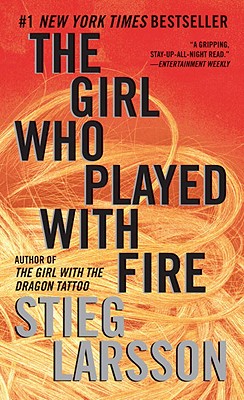
Stieg Larsson and the Art of Meta Writing

Over the past few months, I've made my way through Stieg Larsson's Millennium series, and on a basic level, I've enjoyed them. The occasional fast pace makes up for some of the details.

Admittedly, however, on first glance, the first few chapters of The Girl with the Dragon Tattoo (#1), and then dozens of pages at a time throughout the rest of the books, feel as if they are riddled with information-dump.

While reading the first book, I didn't notice this per se, but my critiquing skills hadn't been honed to the point they were when I began The Girl who Played with Fire (#2). I just thought it took a while to get into the story (a sign of info-dump, yes). By the time I started reading #2, several months later, I had already read a few people's comments on Goodreads. One comment on #1 caught my eye.

"Got very bored after 100 pages. Sorry. Way too much narrative." (link)

I reflected and considered his point. Yes, there's a lot of narrative at the beginning, little dialogue, less action.

So, why on earth could something with so much extraneous information be so popular? They're great books. I mentioned this to a non-writing friend, and she said she simply hadn't noticed. Can it be that the populace has more patience for info-dumping than those of us who have had it drilled into our brains NOT to write like that?

Not likely. That's the populace that may eventually clothe and feed us (if we make it past a publisher's advance, of course). That's the populace we're supposed to be pleasing. It must be something else.

As I read The Girl who Played with Fire, and later The Girl who Kicked a Hornet's Nest, I focused on the extra narrative, considering its use and purpose. And here's what I came up with:

It's not info-dumping. It's meta-journalistic fiction.

Huh?

Let's start with defining our terms:

meta: adj. (of a creative work) referring to itself or to the conventions of its genre; self-referential.

The Millennium series focuses on journalists in the throes of their journalistic lives, writing and covering the daily lives around them. Journalists don't always have the luxury of paring down their prose in the way that fiction writers do. Whatever information they've uncovered today, be it the fact that Mr. X worked for Texaco in 1987 or Ms. Y has a penchant for blue suede shoes, it could all be relevant tomorrow. Therefore, it's all worth publishing.

The difference, and why we don't notice it as much, is in the presentation: an average story covers 600 to 800 words, and if more information is uncovered, it comes out tomorrow, not as an addition to today's story. There's lots of information, but it's broken up into smaller chunks, and therefore the extra is more digestible.

Larsson takes this concept of journalistic provision of information and writes in this style. In some cases (e.g., the first 100 pages of The Girl with the Dragon Tattoo), maybe it's hard to get through. But the bottom line is that Larsson did something quite clever with the concept of journalism, morphing it into this meta-style of journalistic fiction. It's the reader's job to uncover which bits of extraneous information are important, as if the reader is him/herself an investigator.

In this case, if we can manage through the slow start of #1, I think these books are an excellent read. Taking into consideration what Larsson has done with this meta-style, perhaps we can gain a little more patience in enduring the exposition.

Have you read the Millennium series? What did you think? How did you feel about the narrative/exposition? Was the later action enough to make up for it?

Monday, July 11, 2011

Review: A Visit from the Goon Squad

A Visit from the Goon Squad, by Jennifer Egan, got mixed reviews from some of my cohorts on GoodReads, so I was intrigued when GoodReads decided to start their Book Club Challenge (which, btw, I hadn't heard about before this book, but I hope they continue it with other selections). If you're interested, the Book Club Challenge runs through the end of July, so there's still time to sign up.

The Blurb (from GoodReads):
Bennie is an aging former punk rocker and record executive. Sasha is the passionate, troubled young woman he employs. Here Jennifer Egan brilliantly reveals their pasts, along with the inner lives of a host of other characters whose paths intersect with theirs. With music pulsing on every page, A Visit from the Goon Squad is a startling, exhilarating novel of self-destruction and redemption.

Doesn't really tell you a whole lot, does it? And, I promise you, this blurb does not prepare you for the experience.

Author Jennifer Egan
Photo courtesy of SFGate.com
The basic concept of the book follows the two characters through time and around the world in their lives, yes. What the blurb doesn't tell you is that each story is told in a different point of view (at least two are 1st person, neither of which are from Bennie or Sasha's perspective, one in second person, and a myriad of 3rd person close narratives), only two of which directly highlight Bennie and Sasha (chapters 2 and 1, respectively). Other stories deal with these two "main" characters through tangential connects or sheer-chance encounters, though they all serve to tell the stories of these two characters in a non-traditional sense.

The question that people keep posing, though, is: Is it really a novel? Or is it a collection of short stories?

In my not-so-humble opinion, I'm going to go out on a limb and call it a novel. I really believe it is, though it stretches the boundaries of what the traditional definition entails. All the stories revolve around either Sasha or Bennie. The exceptions are, perhaps, chapters 4 and 5, in which I find no clear, direct connection, but only a tangential (in the mathematical sense of touching at one point, not in the conversational sense in which something is an off-shoot) way.

The way Egan weaves the individual stories, though, made me want to keep reading despite the initial disjunction between the stories. I had been forewarned about this apparent disunity by reading my friends' reviews on GoodReads, so I felt prepared, and I think this helped in my appreciation of the offering. If I had gone in to reading this without that knowledge, I might have been irritated by it as well.

Photo courtesy of Wiki Commons
In an interview, Egan compares the story concepts to a music album—an apt structural comparison given the subject nature behind the stories. Thirteen "tracks" that all come together to make a whole. In buying an album, we as listeners do not expect each song to have the same subject, or the same tempo, or even the same singer in the case of, say, the Beatles. Yet we feel the wholeness of the album. In this same way, Egan has compiled her stories, each individual in their own rights, which together construct a complete piece.

My only real complaint about the book is about how the stories stack together. I love the increased pace that runs throughout the book, which I believe culminates in chapter 12 "Great Rock and Roll Pauses". This chapter is powerful, not only in its plot and characters and emotional thread, but also in how it's presented: it's a visual narrative, created as a slide show diary entry from the POV of Sasha's daughter. This is, in fact, my favorite story of the book (with chapter 10, "Out of Body", as a close second). My complaint actually stems from the final story, which, after such a powerful chapter 12, seems to fall flat. I didn't feel the emotional resonance that had echoed through each of the previous stories, raising to concert levels in chapter 12. Perhaps my eardrums couldn't atune themselves to the acoustic guitar of chapter 13 after the amplified light show. Either way, it felt anti-climactic at best, and left an unsavory residue to associate with the book as a whole.

Bummer, because, otherwise, I really loved the book.

The bottom line: Read this book. Be prepared for a non-traditional novel experience. And let yourself be carried along for the ride. It's worth it.

What other non-traditionally structured novels have you read?

Monday, June 27, 2011

Review of Veiled in Shadows

Veiled in Shadows by Allan Russell

From Goodreads: 1937, Ebi Gausel is riding high as a member of Germany's elite guard, Hitler's SS. An unexpected romance arrives in Ebi's life in the form of the fiery Katharina. Even with Europe teetering on the brink of war their happiness seems assured. But Ebi's certainty comes crashing down as Katharina disappears, leaving hints of a dark secret. In a war fought in the shadows... those who live may do so at the cost of their humanity. Two lovers united by passion ...and divided by hate. As they fight for survival... their most ruthless foe might be one another.


I'll admit, I don't read war fiction. I don't watch war movies. I don't even like talking about war. Spree, I couldn't even watch the Feed The Children commercials in the 80s without bawling. It's not just because I'm a pacifist, because the best war stories aren't about the war, anyway. I'm not sure what it is about these stories that evokes deep sobs from my gut, but it happens every time.

It can be quite embarrassing in a movie theater, btw.

So, why did I read a novel set in WWII Germany? Just feeling masochistic? No. Because I like supporting our online writing community, and I wanted to read Al's work. It had been a long, long time since I had decided to read or watch anything war-related. I've matured (no, really, I have!). I thought it might not be so bad on the emotional level.

*ahem*

I was wrong. Russell's characters evoked emotions from me on several levels, often requiring me to lay the book down and savor my own tears. I enjoyed the ride through the characters' journey of love and war, and seeing multiple sides and viewpoints along the way.

The story is told in first person, though through several people, which can get confusing over time. The most central character, Katherina (or Victoria), seems to be the only person who doesn't make a narrative appearance, keeping her "veiled in shadow". One character gives his side of the story in present tense--a writing choice I didn't understand and which kind of bugged me, but that's a minor point.

Overall I enjoyed the story. It goes through several unexpected twists and turns, especially at the end. If you like period or war fiction and you're looking for an emotional ride, you should read this book.

Wednesday, June 22, 2011

The Return

I've managed to find my way back after my sabbatical and have lots of updates for you.

First, if you check out my BuNoWriMo counters to the right, you'll see that I've had great success in the writing department. If I can finish my latest draft of Fighting Fate and get 10K on Seer, I will have written 50K in June. I'm keeping my fingers and toes crossed, but I think it's possible.

If you'd like to see the first 250 words (well, more like 280) of Seer, it will be posted on Carol Rigg's blog sometime today. Go over, help critique, make comments, or just read and tell me how awesome (or horrible) it is :)

Now that I've had some time away, I feel rejuvenated in the blogging department. In addition to having several fun blog posting ideas in my brain (see below for a few examples), I've also reorganized my Google Reader to help me visit my peeps more often. I'm still working on catching up with all my new followers from A-to-Z, so bear with me. The blogging front, though, looks quite promising.

In the next couple of weeks, I have some exciting things planned.
  • On Friday, I'll be participating in the Getting to Know Your Characters Blogfest, hosted by Elizabeth Mueller and Jeannie Campbell. 
  • On Sunday, Sasha Conte is hosting the Blogfest... Interrupted.
  • On Monday, stop by to read my review of Veiling in Shadows by fellow blogger Al Russell. 
  • Coming sometime in the month of July I will post my review of A Visit from the Goon Squad by Jennifer Egan. I've joined the Goodreads bookclub for it, and can't wait to dig in. 
  • I'm also planning (tentatively) a review of the Millennium series by Stieg Larsson. The popularity of these books drove me to read them, and as I've developed as a writer and read other comments about them on Goodreads, I have discovered lots of things I want to say about them. 
I also have ideas for non-review posts, so stay tuned.

Finally, I returned from my trip to find this in my mailbox:


EEK! I'm so excited. My first ARC. I'm participating in Michelle Davidson Argyle's book tour to celebrate the release of Monarch in September. I can't wait to dig into this one, either.

Oh, and the reunion? It was great. We had fun seeing all kinds of family, and getting outside a bit. Here's a tidbit, straight from the land of corn :)


How have you been? Any fun things to share? What have you read lately, or what do you have lined up next?

PS--Today is my hubby's and my 9th wedding anniversary. I love you, J!

Friday, December 24, 2010

Review of No Place for Heroes

No Place for Heroes by Laura Restrepo

From Goodreads:
From one of the most accomplished writers to emerge from Latin America, No Place for Heroes is a darkly comic novel about a mother and son who return to Buenos Aires in search of her former lover, whom she met during Argentina’s Dirty War. During Argentina’s “Dirty War” of the late ’70s and early ’80s, Lorenza and Ramon, two passionate militants opposing Videla’s dictatorship, met and fell in love. Now, Lorenza and her son, Mateo, have come to Buenos Aires to find Ramon, Mateo’s father. Holed up in the same hotel room, mother and son share a common goal, yet are worlds apart on how they perceive it. For Lorenza, who came of age in the political ferment of the ’60s, it is intertwined with her past ideological and emotional anchors (or were they illusions?), while her postmodernist son, a child of the ’90s who couldn’t care less about politics or ideology, is looking for his actual  father—not the idea of a father, but the Ramon of flesh and blood. Anything goes as this volatile pair battle it out: hilarious misunderstandings, unsettling cruelty, and even a temptation to murder. In the end, they begin to come to a more truthful understanding of each other and their human condition. No Place for Heroes is an addition to that long tradition of the eternal odd couple—in works ranging from Waiting for Godot to Kiss of the Spider Woman—waiting for their fortunes to change, written by one of the most talented and internationally celebrated authors at work today.


I am of two-minds about this book. This is probably due to the fact that there are three stories going on at once—the main story, and two main flashback-stories. The flashbacks are wonderfully crafted, as the narrator reflects on past events with the occasional dialogue interruption from the two MCs in the present. Not only that, but those story-lines are gripping, and things HAPPEN. Unfortunately, the "present" time of the story involves only reminiscing for about 98% of the time, and feels like a gimmick to reveal the flashback stories. The final 5 pages feel rushed, as if the author realized that something needed finally to happen in the "present" and threw together a quick, unsurprising ending. I'm giving this 3 stars on Goodreads because of how much I did enjoy the flashbacks, but that's all. 

Also, a note on translation. This book was originally written in Spanish, a language I can moderately read and understand. The translations feel like Spanish with English words, which simply make the English feel full of choppy or run-on sentences. I even noticed the occasional Spanish noun-adjective word order, which is only confusing when rendered in English. Finally, the translator changed all the swearing to some of the strongest of English, which I don't believe properly carry the meaning of the words in Spanish, and felt jarring in the prose. Don't get me wrong—I love a good swear word in my reading and my own writing, but only when it flows naturally from the characters or from the narrator. None of the swearing came across as natural, which I can only attribute to the lack of ability to really translate these words properly. 

This book would have been my ideal if 1) There had been no "present" time, because I truly loved the historical time and the parallels the author drew between the relationships in the story and the struggles against the Argentinean dictatorship; and 2) I had read it in Spanish. Perhaps I'll try that in the future.


Bottom Line: Read it in Spanish, if you read it at all, but I'm not gonna push it.

Wednesday, December 22, 2010

Review of Scrivener

For those of you who are writers, whether you are technologically savvy or not, I would like to recommend Scrivener, a program developed specifically with the novelist in mind. With all the hype surrounding different programs for NaNoWriMo, I decided to take a step away from my traditional Word and try something different, and Scrivener offered a NaNoWriMo trial version that lasted not 30 days, but until December 7. So I tried it. Now I will never go back.

Scrivener's design is user-friendly for the every-day operations. Each "page" is meant to be an individual scene. You can title it anything you want without it printing (though see below on my inability to make this work at first), which makes them easy to find. There's a list to the left of all of your scenes and chapters (in this list, folders are chapters, and when you Compile it, they are automatically numbered in chapters without your numbering them). You can see each "file" clearly, and drag them up and down to rearrange.

You can also rearrange your scenes easily on a "cork board".You simply drag the note card to where you'd rather it be. The entire "file" with all of your text automatically moves without the nastiness of cutting and pasting and hoping the clipboard's not too full already.

To the right, there are a number of helpful tools. The two I found most helpful were 1) the notes and 2) the links. You can leave yourself any amount of notes for the scene or chapter that will never be printed in your compile or counted in your word count. In Word, I would simply type these in for myself and highlight them or change the color of the text, but then I would get an inaccurate word count. This is ideal for those of you who are as forgetful as I am in terms of adding this action, or who want to give yourself ideals as you read through without heavily revising at any given moment. The links option is also great because it gives you direct access to your research from the same file.

Another great option in this program are the character and setting sketches. It's wonderful to have quick access to your characters without opening other files. You can even include a picture. None of the notes in these "files" are included in your word count (although you can have them included with a simple click of a check box), but are still right at your fingertips. You can even include pictures, which I LOVE.

For more detailed information on any of these features, Scrivener tutorial videos can be found here.

Bottom Line: If you write novels, this will spoil you to no end, and you won't be able to go back to Word ever again :)

Tuesday, December 21, 2010

Review of The Handbook for Lightning Strike Survivors

The Handbook for Lightning Strike Survivors by Michele Young-Stone.

From Goodreads:
On a sunny day in Chapel Hill, North Carolina, eight-year-old Becca Burke was struck by lightning. No one believed her - not her philandering father or her drunk, love-sick mother - not even when her watch kept losing time and a spooky halo of light appeared overhead in photographs. Becca was struck again when she was sixteen. She survived, but over time she would learn that outsmarting lightning was the least of her concerns.

In rural Arkansas, Buckley R. Pitank's world seemed plagued by disaster. Ashamed but protective of his obese mother, fearful of his scathing grandmother, and always running from bullies (including his pseudo-evangelical stepfather), he needed a miracle to set him free. At thirteen years old, Buckley witnessed a lightning strike that would change everything.

Now an art student in New York City, Becca Burke is a gifted but tortured painter who strives to recapture the intensity of her lightning-strike memories on canvas. On the night of her first gallery opening, a stranger appears and is captivated by her art. Who is this odd young man with whom she shares a mysterious connection?

When Buckley and Becca finally meet, neither is prepared for the charge of emotions - or for the perilous event that will bring them even closer to each other, and to the families they've been running from for as long as they can remember.


Young-Stone has an amazing gift of craft when it comes to both language and time. This book takes the reader on not one, but two adventures for over 300 pages until the stories finally converge. Maintaining interest in two protagonists for such a long time can be a difficult and daunting task, but Young-Stone has done a beautiful job. Each person is appropriately human, and the reader loves or hates them as if they had walked out of real life and settled on the page.


I was extremely lucky, because I won this book from Therese Walsh's 50+ book contest in August. I suspect I wouldn't have read The Handbook otherwise, as it's not within my personal realm of genre fiction. So, thank you to Theresa for holding the contest, and thank you so much to Michele for including her book and sending the copy to me.

Bottom line: Read this book. You won't regret it, unless it makes you more prone to lightning. I seem to be safe so far :)

Tuesday, July 13, 2010

A Review, a Review-Like Rant, and Other Book Related News

Actually, I think I'll start with my non-review news.  A couple of weeks ago I won two books!  Woohoo!  First, I won Princess for Hire by Lindsey Leavitt through her Impact Initiative series, and I'm really excited to read it.  Second, I won a copy of No Place for Heroes: A Novel by Laura Restrepo from Goodreads.  I haven't received either, yet, but I'm really excited.  I'm sure you'll hear all about it when I do.

Princess for Hire (from Goodreads):  When a well-dressed woman steps out of a bubble and wants to know if you'd like to become a substitute princess, do you

A) run
B) faint
C) say yes?

For Desi Bascomb, who's been longing for some glamour in her Idaho life, the choice is a definite C). Desi has a rare ability: with the help of "Royal Rouge," she can temporarily transform into the exact look-alike of any princess who needs her subbing services. Dream come true, right?

Well, Desi soon discovers that subbing involves a lot more than wearing a tiara and waving at cameras.... In this winning debut, one girl's dream of glamour transforms into the desire to make a positive impact. And an impact Desi makes, one royal fiasco at a time.

No Place for Heroes: A Novel (from Goodreads):  During Argentina’s “Dirty War” of the late ’70s and early ’80s, Lorenza and Ramon, two passionate militants opposing Videla’s dictatorship, met and fell in love. Now, Lorenza and her son, Mateo, have come to Buenos Aires to find Ramon, Mateo’s father. Holed up in the same hotel room, mother and son share a common goal, yet are worlds apart on how they perceive it. For Lorenza, who came of age in the political ferment of the ’60s, it is intertwined with her past ideological and emotional anchors (or were they illusions?), while her postmodernist son, a child of the ’90s who couldn’t care less about politics or ideology, is looking for his actual  father—not the idea of a father, but the Ramon of flesh and blood.

Anything goes as this volatile pair battle it out: hilarious misunderstandings, unsettling cruelty, and even a temptation to murder. In the end, they begin to come to a more truthful understanding of each other and their human condition.

No Place for Heroes is an addition to that long tradition of the eternal odd couple—in works ranging from Waiting for Godot to Kiss of the Spider Woman—waiting for their fortunes to change, written by one of the most talented and internationally celebrated authors at work today.


Now, on to the reviews:

Review: I Heart You, You Haunt Me by Lisa Schroeder

From Goodreads:   
Girl meets boy.Girl loses boy.
Girl gets boy back...
...sort of.

Ava can't see him or touch him, unless she's dreaming. She can't hear his voice, except for the faint whispers in her mind. Most would think she's crazy, but she knows he's here.

Jackson. The boy Ava thought she'd spend the rest of her life with. He's back from the dead, as proof that love truly knows no bounds.


My take:  This novel is beautifully crafted, written in verse.  It's written in such a tight fashion that I read it in two sittings of about a half-hour each.  But don't let the speed fool you.  This story is a continuous emotional ride.  Every word has shade and substance enough to redirect your emotional compass.  It's been a long time since I've read a book so beautifully written and so powerful that I cried.   It is truly an amazing read.

WARNING:  This is not a book to be read in a park, on a train, while driving, in the library, at your friend's house (although, your boyfriend's place might be okay if you want to induce extra snuggling), or any other public venue.  You will cry.

The bottom line:  You must read this book!

Want to know more?  Check out this interview with Lisa Schroeder.


Review/Rant:  The Short Second Life of Bree Tanner by Stephenie Meyer

From Goodreads: Bree Tanner can barely remember life before she had uncannily powerful senses, superhuman reflexes and unstoppable physical strength. Life before she had a relentless thirst for blood... life before she became a vampire.

All Bree knows is that living with her fellow newborns has few certainties and even fewer rules: watch your back, don't draw attention to yourself and, above all, make it home by sunrise or die. What she doesn't know: her time as an immortal is quickly running out.


Then Bree finds an unexpected friend in Diego, a newborn just as curious as Bree about their mysterious creator, whom they know only as "her". As they come to realize that the newborns are pawns in a game larger than anything they could have imagined, Bree and Diego must choose sides and decide whom to trust. But when everything you know about vampires is based on a lie, how do you find the truth?


My take: Stephenie Meyer said recently that she was burnt out on vampires.  After reading this, so am I.  Well, her breed of vampires, anyway.  While this novella was surely not written of the fly in the past six months to be released—coincidentally—just in time for the release of Eclipse, I can't help but wonder if this was past of the idea eighteen months ago or two years ago, following the instant success of Twilight.

I don't know what I was expecting.  This novella doesn't have the tortured, forbidden romance or the overwhelming fear of impending doom, or, hell!, even a suspenseful, surprise ending—unless you haven't already read Eclipse, in which case I wonder why you're reading Bree Tanner.  Anyway, Meyer's writing style is consistent throughout her four Twilight novels and this novella and, well, as was well put by Alan Rinzler, some people are great writers and others are great storytellers (he mentions Myers (sic) specifically).

While I do not contest that Meyer is a great storyteller—I love Twilight as much as the next vampire junkie—I did not connect to Bree's story at all.  In Twilight et al, I can connect with Bella.  I don't necessarily have to like her, or agree with her actions, but having two X chromosomes and having been to high school and remembering what it's like to fall in love really puts us on the same plane.  On the other hand, I've never been a vampire, I've never seen myself sparkle in daylight, I've never bounded through trees so that someone else wouldn't catch my scent, I've never fallen in love with someone while hiding in a cave, and, well, I've never eaten anyone.  Call me petty, but I couldn't find the love or sympathy for Bree anywhere inside me.  And I wanted to.

I wanted to like the latest addition to the Twilight Saga.  But, sadly, I feel like it's simply a rushed marketing tool to help up the ticket sales at the box office—as if they needed any help!  Twi-hards have long memories, just like their vampires.  They wouldn't have forgotten to see the movie, folks, I promise.

Anything positive?  Sure.  I really appreciated that the whole Twilight team decided to put the e-book online for free, even if it was only for a limited time.  If I had paid for this, I would have been upset and not simply disappointed.  Of course, that's also part of the marketing tool, right?  Make it available to as many people as possible right before the movie....

I need to stop.

My not-so-humble bottom line:  This one should have stayed on the shelf.


PS—None of my complaining will keep me from seeing the new movie.
Related Posts with Thumbnails