

While reading the first book, I didn't notice this per se, but my critiquing skills hadn't been honed to the point they were when I began The Girl who Played with Fire (#2). I just thought it took a while to get into the story (a sign of info-dump, yes). By the time I started reading #2, several months later, I had already read a few people's comments on Goodreads. One comment on #1 caught my eye.
"Got very bored after 100 pages. Sorry. Way too much narrative." (link)
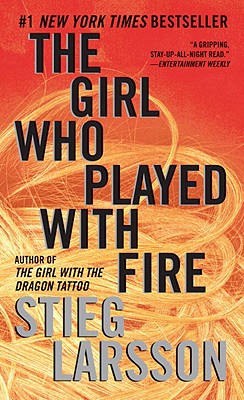 I reflected and considered his point. Yes, there's a lot of narrative at the beginning, little dialogue, less action.
So, why on earth could something with so much extraneous information be so popular? They're great books. I mentioned this to a non-writing friend, and she said she simply hadn't noticed. Can it be that the populace has more patience for info-dumping than those of us who have had it drilled into our brains NOT to write like that?
Not likely. That's the populace that may eventually clothe and feed us (if we make it past a publisher's advance, of course). That's the populace we're supposed to be pleasing. It must be something else.
 As I read The Girl who Played with Fire, and later The Girl who Kicked a Hornet's Nest, I focused on the extra narrative, considering its use and purpose. And here's what I came up with:
It's not info-dumping. It's meta-journalistic fiction.
Huh?
Let's start with defining our terms:
meta: adj. (of a creative work) referring to itself or to the conventions of its genre; self-referential.
The Millennium series focuses on journalists in the throes of their journalistic lives, writing and covering the daily lives around them. Journalists don't always have the luxury of paring down their prose in the way that fiction writers do. Whatever information they've uncovered today, be it the fact that Mr. X worked for Texaco in 1987 or Ms. Y has a penchant for blue suede shoes, it could all be relevant tomorrow. Therefore, it's all worth publishing.
The difference, and why we don't notice it as much, is in the presentation: an average story covers 600 to 800 words, and if more information is uncovered, it comes out tomorrow, not as an addition to today's story. There's lots of information, but it's broken up into smaller chunks, and therefore the extra is more digestible.
Larsson takes this concept of journalistic provision of information and writes in this style. In some cases (e.g., the first 100 pages of The Girl with the Dragon Tattoo), maybe it's hard to get through. But the bottom line is that Larsson did something quite clever with the concept of journalism, morphing it into this meta-style of journalistic fiction. It's the reader's job to uncover which bits of extraneous information are important, as if the reader is him/herself an investigator.
In this case, if we can manage through the slow start of #1, I think these books are an excellent read. Taking into consideration what Larsson has done with this meta-style, perhaps we can gain a little more patience in enduring the exposition.
Have you read the Millennium series? What did you think? How did you feel about the narrative/exposition? Was the later action enough to make up for it?


