Welcome to today's post on the A-to-Z Blogging Challenge. My challenge, as I have chosen to accept it, is thus: I have asked on my Facebook and Twitter accounts for people to contribute random words beginning with today's letter. From Random.org, I have selected one of these words, and will below challenge myself to connect said word to writing.
For the letter Z, I received 36 suggestions. Random.org selected number 18: zippy.
Zippy
It's been a long month. We've zipped through several different topics together, some of which related to writing more than others. And now we've come to the last one.
Zippy.
I used to be a pantser. I wrote three novels as a pantser. I know it works for some people, but it didn't work for me. I didn't pay any regard to the tempo of the scenes, and make sure they continued with a decent pace while raising the tension each time.
Now I plot everything, each scene throughout the story. I focus on the tempo of every one. I want them all to be zippy, high paced (as much as possible, anyway). I want the reader to be unable to put the story down. I can't say I've succeeded, but I'm still trying.
How do you keep your stories feeling zippy? Are you a pantser or a plotter?
Welcome
Welcome to my self-indulgent location for the stories (good and bad) that I can't prevent myself from writing. All comments and criticisms welcome. I post on Tuesdays and Saturdays.
Showing posts with label plotting. Show all posts
Saturday, April 30, 2011
Friday, April 1, 2011
Acorn (#atozchallenge)
Welcome to my 1st post on the A-to-Z Blogging Challenge. My challenge, as I have chosen to accept it, is thus: I have asked on my Facebook and Twitter accounts for people to contribute random words beginning with the letter A (as well as B, C, etc.). From Random.org, I have selected one of these words, and will below challenge myself to connect said word to writing.
For the letter A, I received 46 suggestions. Random.org selected number 33: Acorn.
Acorn
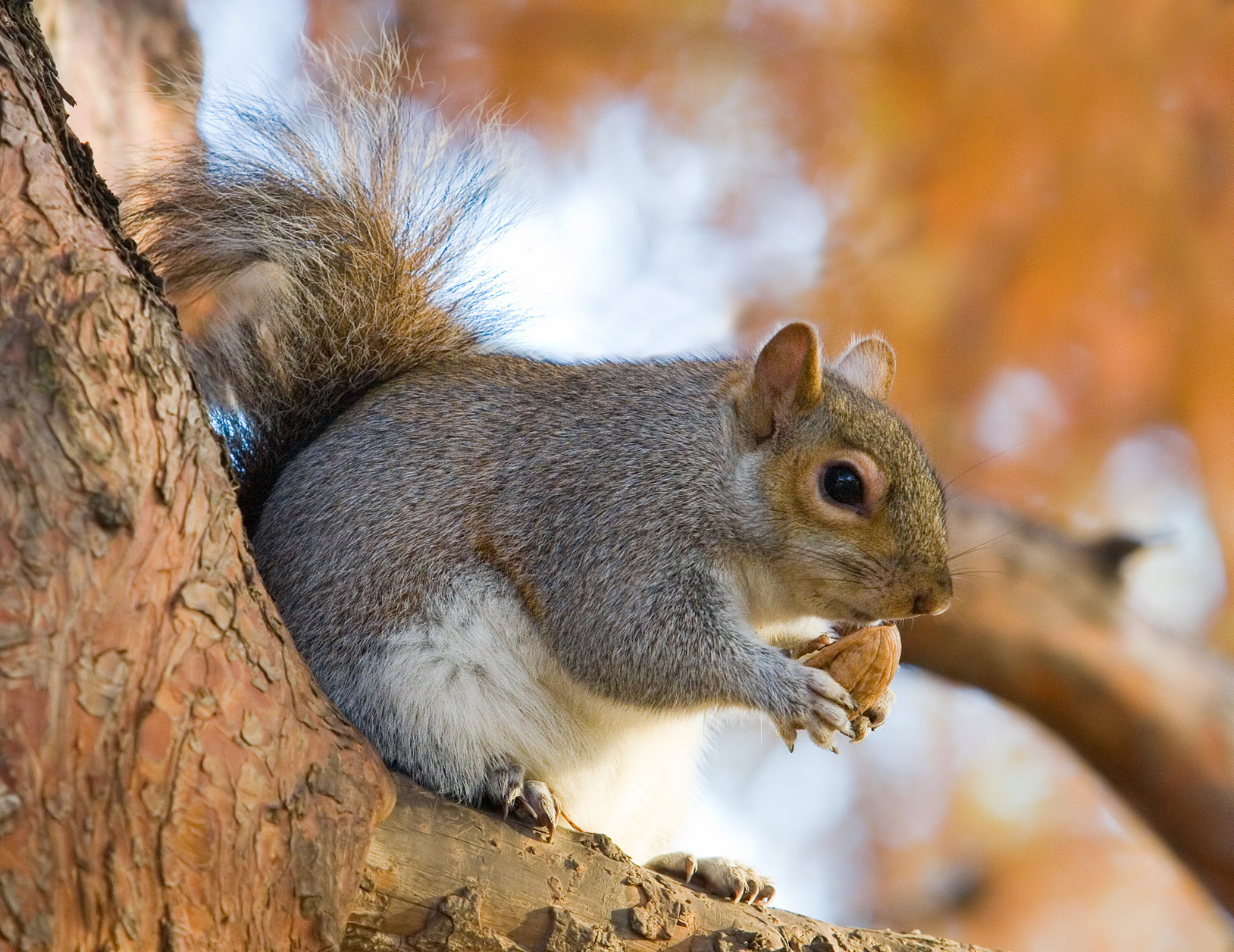
I love squirrels.
I realize that I am in the minority of the population with this, as they rummage through planters, dig holes in the middle of your lawn, and potentially drive your pets (dogs, cats, iguanas, etc.) berserk with their romping and their erratic tail-flipping.
But just take a moment to consider the life of a squirrel. A squirrel's average life span is six years (source), and so they've got jam pack their lives with food and fun (and probably work on that whole continuation-of-the-species schtick, but that's beside the point).
Now, squirrels can't eat cellulose (i.e., the green in plant leaves), and need food full of protein, fat, and carbs (just like us, unless you're on Atkins) (source). Squirrels spend the summer months storing food so they can survive the winter, burying several sources of food--among them, the acorn.
Why's the acorn so great? As any seed, it's high in protein, but it's also high in fat to help keep those little rodents warm through the winter. It's packed with all the good stuff squirrels need for endurance through the cold, winter months. An acorn has all the vital goodness a squirrels needs in order to be successful in its main purpose--survival.
And this relates to writing... How?
Let's talk about the acorn as a story idea.
What's necessary in that little acorn to make a successful story? Well developed characters (the main building block, i.e., the protein) and a plot with continual rising tension (the slow-burning endurance, i.e., the fat).
This is getting a little foodie. Anyone else hungry?
This tiny little seed with a cute hat can sustain the squirrel for a long time. A good idea, rich with character and plotty goodness, can lead the writer to beautiful novel, short story, poem, or even song lyrics. The build blocks are there. It's up to the writer to use them.
Sure, writing takes so much more than the seed to be successful. It takes the endurance to get through the winter (drafting, editing, honing style, discovering voice) and the early spring (querying) to get to the beautiful summer. With that endurance, which can come with the writer's belief in the strength of that little acorn, and faith in one's self, we can all make it to summer.
What do you do with your acorns? Do you have an ideas file? A notebook in your back pocket? A hole in the tree in your backyard where you hide them?
PS--I am also taking suggestions for the letter D. Got any? Leave them below. Thanks!
For the letter A, I received 46 suggestions. Random.org selected number 33: Acorn.
Acorn
| Image courtesy of Wiki Commons |
I realize that I am in the minority of the population with this, as they rummage through planters, dig holes in the middle of your lawn, and potentially drive your pets (dogs, cats, iguanas, etc.) berserk with their romping and their erratic tail-flipping.
But just take a moment to consider the life of a squirrel. A squirrel's average life span is six years (source), and so they've got jam pack their lives with food and fun (and probably work on that whole continuation-of-the-species schtick, but that's beside the point).
Now, squirrels can't eat cellulose (i.e., the green in plant leaves), and need food full of protein, fat, and carbs (just like us, unless you're on Atkins) (source). Squirrels spend the summer months storing food so they can survive the winter, burying several sources of food--among them, the acorn.
Why's the acorn so great? As any seed, it's high in protein, but it's also high in fat to help keep those little rodents warm through the winter. It's packed with all the good stuff squirrels need for endurance through the cold, winter months. An acorn has all the vital goodness a squirrels needs in order to be successful in its main purpose--survival.
And this relates to writing... How?
| Image courtesy of Wiki Commons |
What's necessary in that little acorn to make a successful story? Well developed characters (the main building block, i.e., the protein) and a plot with continual rising tension (the slow-burning endurance, i.e., the fat).
This is getting a little foodie. Anyone else hungry?
This tiny little seed with a cute hat can sustain the squirrel for a long time. A good idea, rich with character and plotty goodness, can lead the writer to beautiful novel, short story, poem, or even song lyrics. The build blocks are there. It's up to the writer to use them.
Sure, writing takes so much more than the seed to be successful. It takes the endurance to get through the winter (drafting, editing, honing style, discovering voice) and the early spring (querying) to get to the beautiful summer. With that endurance, which can come with the writer's belief in the strength of that little acorn, and faith in one's self, we can all make it to summer.
What do you do with your acorns? Do you have an ideas file? A notebook in your back pocket? A hole in the tree in your backyard where you hide them?
PS--I am also taking suggestions for the letter D. Got any? Leave them below. Thanks!
Tuesday, February 1, 2011
Happiness is a Warm Draft
For some reason the original Beatles song is running through my head. I felt compelled.
This will be short for many reasons, the biggest of which is I'm running late and don't have much time, but I wanted to be sure to post today.
First, Nathan Bransford will be posting the finalists for his Stupendously Ultimate First Paragraph Challenge sometime today. Hop over to his blog to read and vote for the finalists.
[poor segue]
So I mentioned last week that I have gone back to revising my first WIP. I realized I had to completely change the backstory to make the present story more believable. Well, in the process, my brain has been ON FIRE, creating this trajectory for my MCs. So much fun!
This morning, in my half-awake-half-asleep, please-don't-bother-me-because-the-sun's-not-up-yet state, I was plotting out a scene in a park with my four main characters. Now bear in mind that, in my original draft, the story is told in 1st person. Well, my imagination took me to a place where my supporting male character separated from the rest of the group—or security reasons, of course—and my mind followed him. The scene evolved, and not only did I like it, but I realized it might be rather crucial.
Thus, a new draft was born (I believe this one is marked number 592, give or take a few hundred). I started working on it yesterday morning, and wrote over 1000 words yesterday in time that I didn't have to be working on it. But when the fire is lit, it's hard to contain, no?
So, in the spirit of Nathan Bransford's Stupendously Ultimate First Paragraph Challenge, I give to you my new and latest first paragraph.
Anabelle Lindsky tugged at the collar of her shirt. She’d never felt comfortable with things around her neck—turtleneck sweaters, tight necklaces, even her fingers to check her pulse—but today was different. Today she would endure anything to get to the Mansion.
And, folks, I promise I'll get off my editing/revising kick soon. I'm just so excited about how this is going for me that I need to share. Thanks for reading. :)
What person do you normally use to narrate? 1st/2nd/3rd? Do you jump back and forth? Do you just know which will work best? How do you decide? Have you ever written something completely, and then started over in another POV?
This will be short for many reasons, the biggest of which is I'm running late and don't have much time, but I wanted to be sure to post today.
First, Nathan Bransford will be posting the finalists for his Stupendously Ultimate First Paragraph Challenge sometime today. Hop over to his blog to read and vote for the finalists.
[poor segue]
So I mentioned last week that I have gone back to revising my first WIP. I realized I had to completely change the backstory to make the present story more believable. Well, in the process, my brain has been ON FIRE, creating this trajectory for my MCs. So much fun!
This morning, in my half-awake-half-asleep, please-don't-bother-me-because-the-sun's-not-up-yet state, I was plotting out a scene in a park with my four main characters. Now bear in mind that, in my original draft, the story is told in 1st person. Well, my imagination took me to a place where my supporting male character separated from the rest of the group—or security reasons, of course—and my mind followed him. The scene evolved, and not only did I like it, but I realized it might be rather crucial.
Thus, a new draft was born (I believe this one is marked number 592, give or take a few hundred). I started working on it yesterday morning, and wrote over 1000 words yesterday in time that I didn't have to be working on it. But when the fire is lit, it's hard to contain, no?
So, in the spirit of Nathan Bransford's Stupendously Ultimate First Paragraph Challenge, I give to you my new and latest first paragraph.
Title: The Monarchy's Lies #592 (title subject to change, since I don't like it anymore)
Genre: YA Romance/Urban Fantasy
Anabelle Lindsky tugged at the collar of her shirt. She’d never felt comfortable with things around her neck—turtleneck sweaters, tight necklaces, even her fingers to check her pulse—but today was different. Today she would endure anything to get to the Mansion.
And, folks, I promise I'll get off my editing/revising kick soon. I'm just so excited about how this is going for me that I need to share. Thanks for reading. :)
What person do you normally use to narrate? 1st/2nd/3rd? Do you jump back and forth? Do you just know which will work best? How do you decide? Have you ever written something completely, and then started over in another POV?
Thursday, January 20, 2011
The Art of the Outline
I used to fancy myself as a pantser. I truly did. Or at least about here:
I always had some kind of plan for the stories: a beginning, a couple crucial middle points, and a vague idea of the end. But after leaving point A, I could have gone through both Nova Scotia and Dubai before getting to point B. Editing then involved reducing the Trans-Siberian railroad trip to a transcontinental flight (no snacks included; please pay $25 per checked luggage item), and maybe my characters didn't really NEED to go to Dubai. I'll clip that and keep it for a later WIP.
This lasted until NaNo, I think. I was so excited to start on that new piece, I spent days outlining, character sketching, etc. I'm glad I did, because I don't think I would have finished NaNo otherwise. I needed that outline to remind me of where else I needed to go, and which overpriced-with-hidden-fees transcontinental flight could more easily get me there.
Then I started working on this latest project of mine. Can I just say for the record that my brain won't let it go ANYWHERE without an outline? So, what have I been doing this week? Well, besides avoiding my WIP since I don't know where it's going, I've started outlining (and then because I was excited about the outline taking shape, apparently now I'm blogging. Productive, huh?).
My goal for this week is to get this amorphous little outline into something resembling the outline I used for NaNo, so that by next week I will be less afraid of this new WIP. I'm really happy with what few ideas have solidified in my mind regarding this WIP, but fumbling in the dark isn't my style anymore. I'm not sure if it's because I've changed as a writer—I did have that writing class last semester that could have also contributed to this change—or if it's particular to this WIP. Either way, I need this outline whipped into shape.
If you plan, how do you plan? What's your strategy for developing the sequence of events?
If you pants, how do you learn to trust your characters with each new WIP that they'll get you to the end in a decent fashion?
I always had some kind of plan for the stories: a beginning, a couple crucial middle points, and a vague idea of the end. But after leaving point A, I could have gone through both Nova Scotia and Dubai before getting to point B. Editing then involved reducing the Trans-Siberian railroad trip to a transcontinental flight (no snacks included; please pay $25 per checked luggage item), and maybe my characters didn't really NEED to go to Dubai. I'll clip that and keep it for a later WIP.
This lasted until NaNo, I think. I was so excited to start on that new piece, I spent days outlining, character sketching, etc. I'm glad I did, because I don't think I would have finished NaNo otherwise. I needed that outline to remind me of where else I needed to go, and which overpriced-with-hidden-fees transcontinental flight could more easily get me there.
Then I started working on this latest project of mine. Can I just say for the record that my brain won't let it go ANYWHERE without an outline? So, what have I been doing this week? Well, besides avoiding my WIP since I don't know where it's going, I've started outlining (and then because I was excited about the outline taking shape, apparently now I'm blogging. Productive, huh?).
My goal for this week is to get this amorphous little outline into something resembling the outline I used for NaNo, so that by next week I will be less afraid of this new WIP. I'm really happy with what few ideas have solidified in my mind regarding this WIP, but fumbling in the dark isn't my style anymore. I'm not sure if it's because I've changed as a writer—I did have that writing class last semester that could have also contributed to this change—or if it's particular to this WIP. Either way, I need this outline whipped into shape.
If you plan, how do you plan? What's your strategy for developing the sequence of events?
If you pants, how do you learn to trust your characters with each new WIP that they'll get you to the end in a decent fashion?
Thursday, October 28, 2010
The Pantser Depantsed
So I think of myself as a pantser, but the idea of pantsing for NaNo makes my knees shake in my fashionable knee-high boots. I like to discover the journey as the characters move along, but as far as I can tell, there are two problems with this for me:
I'm so excited about NaNo. Can you tell?
How do you do your writing prep? How do you keep track of all of your notes and ideas?
- Keeping up with the 2000 word/day target average.
- Making sure I maintain the increase in tension from scene to scene.
I'm so excited about NaNo. Can you tell?
How do you do your writing prep? How do you keep track of all of your notes and ideas?
Wednesday, October 27, 2010
NaNo - Down and Dirty
I've signed up for email notifications from my local forums on NaNo's website. In addition to the usual write-in organizing messages and tips on how to get your word count completed while drunk college students yell outside your humble abode (*cough* my humble abode), there has also been a discussion as to what writing programs/software people intend to use to reach their 50K.
So, I thought, what the hell? Word only gets you so far, right? Maybe I'll try something different.
First, I downloaded yWriter5. Of course, I'm a dedicated Mac user, and this software is specifically designed for Windows. BUT there's a work-around. So I gave it a shot, downloaded the intermediary program to make it work, and tried it. I imported a couple hundred words from something else and then tried to edit it. DENIED! Apparently there will be no editing to imported text. Why? Don't know, but someone else on the forums had a similar issue. So, I thought, back to Word.
Then another message came through. The woman said she had tried Schrivener, but was going to stick to yWriter5. I thought, hmm, what is this Schrivener you speak of, and decided to check it out. Bonus one: there's a Mac-friendly program already--meaning, no work-around programs. *happy dance* Bonus two: it's a lot less DOS-like and a lot more user-friendly interface-y. Bonus three: even though the software isn't free, it has a trial period that goes through Dec 7 so NaNo users can try it out. Bonus four: if you don't win NaNo, you get a 20% discount at the end just for trying. If you DO win NaNo, you get a 50% discount. Bonus five: How many bonuses do y'all need!?!
So, I've set up my NaNo template and I'm going to start cork-boarding this weekend (I'm a little late in the game, I know, but I've always been more of a pantser). I'm also going to import the novel I've been working on (and just finished rewrites for last week *happy dance*), and get all of my info in one location, including my links and JPGs of characters, etc. I think this program seems entirely awesome, and I can't wait to really give it a spin.
Thus endeth the advertisement.
How are you writing your NaNo novel?
So, I thought, what the hell? Word only gets you so far, right? Maybe I'll try something different.
First, I downloaded yWriter5. Of course, I'm a dedicated Mac user, and this software is specifically designed for Windows. BUT there's a work-around. So I gave it a shot, downloaded the intermediary program to make it work, and tried it. I imported a couple hundred words from something else and then tried to edit it. DENIED! Apparently there will be no editing to imported text. Why? Don't know, but someone else on the forums had a similar issue. So, I thought, back to Word.
Then another message came through. The woman said she had tried Schrivener, but was going to stick to yWriter5. I thought, hmm, what is this Schrivener you speak of, and decided to check it out. Bonus one: there's a Mac-friendly program already--meaning, no work-around programs. *happy dance* Bonus two: it's a lot less DOS-like and a lot more user-friendly interface-y. Bonus three: even though the software isn't free, it has a trial period that goes through Dec 7 so NaNo users can try it out. Bonus four: if you don't win NaNo, you get a 20% discount at the end just for trying. If you DO win NaNo, you get a 50% discount. Bonus five: How many bonuses do y'all need!?!
So, I've set up my NaNo template and I'm going to start cork-boarding this weekend (I'm a little late in the game, I know, but I've always been more of a pantser). I'm also going to import the novel I've been working on (and just finished rewrites for last week *happy dance*), and get all of my info in one location, including my links and JPGs of characters, etc. I think this program seems entirely awesome, and I can't wait to really give it a spin.
Thus endeth the advertisement.
How are you writing your NaNo novel?
Wednesday, August 18, 2010
To Prologue or Not To Prologue?
*sigh*
I recently joined an online critique group, and gave them my latest rewrite of the first 4 pages of WiP #1. The latest rewrite has seen me scrapping the first 3 chapters, and starting at the height of the initial action. But there was one catch.
What's going on? Where does this take place? Is this our world or another one?
Yeowch! Too many questions are left outstanding, but need to be answered earlier.
I don't want to reintroduce three chapters (approx. 10K words) of backtory. So, the question is, what do I do to make things clear early enough in the story while still avoiding large paragraphs of exposition?
Here was my thought, and I don't know how much I like it. A prologue. Now, everyone and their agent's mother says not to prologue, so I'm torn. At the moment I have 1 page of prologue, approx. 260 words, introducing one key historical moment of background, still trying to capture the reader's attention.
One potential problem is that the prologue has to be told through a 3rd person omniscient narrator. The rest of the story is (currently) 1st person. I recently read a book that did this, and it didn't feel problematic to me, but my hubby (the lit PhD) was concerned about the transition.
Of course, the other problem seems to be that prologues are loathed and, by some, seem to be considered a sign of bad writing. I don't exactly want to introduce myself that way, that's for sure. I'm just not sure what else to do.
So, folks, what do you think? Do you prologue? Do you hate prologues? How do you feel about the narrator transition from one to the other? Am I committing a mortal literary sin here?
I recently joined an online critique group, and gave them my latest rewrite of the first 4 pages of WiP #1. The latest rewrite has seen me scrapping the first 3 chapters, and starting at the height of the initial action. But there was one catch.
What's going on? Where does this take place? Is this our world or another one?
Yeowch! Too many questions are left outstanding, but need to be answered earlier.
I don't want to reintroduce three chapters (approx. 10K words) of backtory. So, the question is, what do I do to make things clear early enough in the story while still avoiding large paragraphs of exposition?
Here was my thought, and I don't know how much I like it. A prologue. Now, everyone and their agent's mother says not to prologue, so I'm torn. At the moment I have 1 page of prologue, approx. 260 words, introducing one key historical moment of background, still trying to capture the reader's attention.
One potential problem is that the prologue has to be told through a 3rd person omniscient narrator. The rest of the story is (currently) 1st person. I recently read a book that did this, and it didn't feel problematic to me, but my hubby (the lit PhD) was concerned about the transition.
Of course, the other problem seems to be that prologues are loathed and, by some, seem to be considered a sign of bad writing. I don't exactly want to introduce myself that way, that's for sure. I'm just not sure what else to do.
So, folks, what do you think? Do you prologue? Do you hate prologues? How do you feel about the narrator transition from one to the other? Am I committing a mortal literary sin here?
Tuesday, August 17, 2010
When In Doubt, Throw Everything Out and Start Over
Whew!
WriteOnCon was an intense ride. I learned so much in such a short period (3 days!). Top that off with the final for my intensive summer class (as of Thursday I am officially class-free for two weeks!), and my already slushy mind simply melted into sticky sugar water. I'm still trying to piece everything together and make sense of it.
One post (series) that impacted me from the conference was from agent Weronika Janczuk (and if I didn't love her from her posts, I would because her name is Polish!) on pacing and plotting—click here for part 1, part 2, and part 3. I focused on her descriptions of plot arcs, what should happen in the first 1/4, the middle 1/2, and the last 1/4 of the novel, how to build tension, etc., etc., and applied it to my current painful revisions of WiP #1.
I'm not willing to admit that my first round for WiP #1 didn't somewhat conform to the formula set forth in these posts. It did. But I believe it can be better. Scratch that. While it does conform to the increasing tension and tight climax in the last 10%, it's a mediocre story at best, and a complete overhaul will help it shine.
Add to Weronika's posts this vlog by author Kimberly Derting. I don't write YA thriller/suspense, but that doesn't mean there aren't ample lessons in this vlog on how to build suspense that can be applied to any genre. As I contemplated Kimberly's words with Weronika's echoing in my sugary mind, ideas of suspense-building mingled with my pondering of story arcs, and I realized, huh, this could be more suspenseful.
My story is told in 1st person (for now). In the "original" story, my MC finds out some key information less than halfway through the story. I realized I could increase the suspense by delaying her discovery. I've been outlining for a couple of days now a complete overhaul of the story, trying to put the events in a proper order to delay discovery, continually increase the tension, and raise the stakes in the climax.
Finally, I'd like to throw into the mix this post from Helen Ginger's post on the Blood Red Pencil—Writers are Hookers. Beyond the inevitable giggle this invokes in me (yeah, even a few days later), she makes a beautiful point about where the story (and each scene) needs to begin. After reviewing my first 4-6 chapters for over a month now, I'm almost willing to throw out the first two chapters. They are mostly background information, and I know that. I hesitate because I feel like it's important, but we all know that this information can be incorporated later. And some of it has been moved through recent, pre-overhaul revisions, meaning that leaving it upfront is redundant.
To risk getting a little weepy, part of my hesitation in the complete overhaul is strongly personal. This story began as a part of my recovery process after my father passed away. While a strong part of me yearns to be professional and know what needs to get slashed and burnt to make this puppy publishable, deep down I want to leave it, considering it a sacred tribute to my dad. It's a little silly—my father's nowhere to be seen in the entire story—but that doesn't stop the emotional connection and the need to protect my baby from the red-line.
What I've decided, based on this final post by Jennifer Hubbard, is that I don't have to throw anything away. (Okay, I knew that, but it's nice to have the reinforcement.) I can keep the sacred version of my story, the one that makes me think of my struggle and my progress in recovery, and I don't have to share it with anyone but myself. I can love it and baby it and wrap it in a huge security blanket and save it from the big, bad publishing world forever. But I can also take the bones, the deep structure (Snicker, GB linguistics out there! Snicker!), the character histories, etc., and weave them together with this new and improved baby, one that I'm willing to raise and help mature into an undeniable force to be reckoned with in the brutal publishing industry. I'll teach it not to take criticism personally—my baby could never learn that. I'll mold it into a giant who will box its way onto the desk of an agent, causing said agent to swoon. After rebandaging its fearsome hands, stopping the bloody nose and tending to its swollen lip, it will be ready to move from the agent's desk to that of the publishers, who will also love and adore it...
Man, am I getting ahead of myself! I haven't done anything more than work on the outline. I need to stop daydreaming and get to work.
How do you feel when you have to start over? The more seasoned writers out there must not do this as often, but I know we have all done it at one point or another. Have you ever coddled something despite its disrepair? How long did it take you to admit that some work had to move permanently onto the shelf?
WriteOnCon was an intense ride. I learned so much in such a short period (3 days!). Top that off with the final for my intensive summer class (as of Thursday I am officially class-free for two weeks!), and my already slushy mind simply melted into sticky sugar water. I'm still trying to piece everything together and make sense of it.
One post (series) that impacted me from the conference was from agent Weronika Janczuk (and if I didn't love her from her posts, I would because her name is Polish!) on pacing and plotting—click here for part 1, part 2, and part 3. I focused on her descriptions of plot arcs, what should happen in the first 1/4, the middle 1/2, and the last 1/4 of the novel, how to build tension, etc., etc., and applied it to my current painful revisions of WiP #1.
I'm not willing to admit that my first round for WiP #1 didn't somewhat conform to the formula set forth in these posts. It did. But I believe it can be better. Scratch that. While it does conform to the increasing tension and tight climax in the last 10%, it's a mediocre story at best, and a complete overhaul will help it shine.
Add to Weronika's posts this vlog by author Kimberly Derting. I don't write YA thriller/suspense, but that doesn't mean there aren't ample lessons in this vlog on how to build suspense that can be applied to any genre. As I contemplated Kimberly's words with Weronika's echoing in my sugary mind, ideas of suspense-building mingled with my pondering of story arcs, and I realized, huh, this could be more suspenseful.
My story is told in 1st person (for now). In the "original" story, my MC finds out some key information less than halfway through the story. I realized I could increase the suspense by delaying her discovery. I've been outlining for a couple of days now a complete overhaul of the story, trying to put the events in a proper order to delay discovery, continually increase the tension, and raise the stakes in the climax.
Finally, I'd like to throw into the mix this post from Helen Ginger's post on the Blood Red Pencil—Writers are Hookers. Beyond the inevitable giggle this invokes in me (yeah, even a few days later), she makes a beautiful point about where the story (and each scene) needs to begin. After reviewing my first 4-6 chapters for over a month now, I'm almost willing to throw out the first two chapters. They are mostly background information, and I know that. I hesitate because I feel like it's important, but we all know that this information can be incorporated later. And some of it has been moved through recent, pre-overhaul revisions, meaning that leaving it upfront is redundant.
To risk getting a little weepy, part of my hesitation in the complete overhaul is strongly personal. This story began as a part of my recovery process after my father passed away. While a strong part of me yearns to be professional and know what needs to get slashed and burnt to make this puppy publishable, deep down I want to leave it, considering it a sacred tribute to my dad. It's a little silly—my father's nowhere to be seen in the entire story—but that doesn't stop the emotional connection and the need to protect my baby from the red-line.
What I've decided, based on this final post by Jennifer Hubbard, is that I don't have to throw anything away. (Okay, I knew that, but it's nice to have the reinforcement.) I can keep the sacred version of my story, the one that makes me think of my struggle and my progress in recovery, and I don't have to share it with anyone but myself. I can love it and baby it and wrap it in a huge security blanket and save it from the big, bad publishing world forever. But I can also take the bones, the deep structure (Snicker, GB linguistics out there! Snicker!), the character histories, etc., and weave them together with this new and improved baby, one that I'm willing to raise and help mature into an undeniable force to be reckoned with in the brutal publishing industry. I'll teach it not to take criticism personally—my baby could never learn that. I'll mold it into a giant who will box its way onto the desk of an agent, causing said agent to swoon. After rebandaging its fearsome hands, stopping the bloody nose and tending to its swollen lip, it will be ready to move from the agent's desk to that of the publishers, who will also love and adore it...
Man, am I getting ahead of myself! I haven't done anything more than work on the outline. I need to stop daydreaming and get to work.
How do you feel when you have to start over? The more seasoned writers out there must not do this as often, but I know we have all done it at one point or another. Have you ever coddled something despite its disrepair? How long did it take you to admit that some work had to move permanently onto the shelf?
Wednesday, August 4, 2010
NaNoWriMo 2010 and the Plotter/Pantser Advantage
I signed up.
Yup, I sure did.
And now I'm terrified. Most of that fear stems from not knowing what my life is going to be like once fall classes resume. And part of it, ladies and gents, is the sheer fact that 50,000 in 30 days is a whole lot of time and sweat and exhaustion waiting to happen.
I'm also pretty stoked.
I bring this up because a) see above paragraph, and b) I've seen a number of posts in the past 24 hours discussing pantsing v. plotting (see Jessica's and Summer's posts, and, tangentially, iggi and gabi's). They've made me consider NaNoWriMo, how it works, and who might be more successful—the pantser or the plotter.
Actually, wait. Can this happen to a plotter? Or is each scene thoroughly outlined so no unknown plot twists can infiltrate the WiP?
Hmm... maybe it's better not to talk about the plotter, seeing as I don't conform to this category.
I've oversimplified the categories, no doubt about it. And such categories are never so well defined, anyway. The continuum is vast, and most of us will fall somewhere in the middle. I tend to lean toward the pantser side (and have found myself getting very little sleep when a story won't stop in my head), but I never start writing before my story has a solid beginning, a few key mid-way points, and a solid ending. All of these are subject to change, of course, but a barebones outline is necessary for me to feel comfortable with the process.
I've had a story idea bouncing around in my head for close to six months now, and I've decided to hold onto it until November 1st. I'll spend some time in the next couple of months writing a preliminary summary for it. Before I discovered NaNoWriMo (or, I should admit, before I went to Google to figure out what all this nonsensical acronym means :) I had already written a couple of pages. I know we're not supposed to start NaNoWriMo with anything but outlines, but I promise what I've got is nothing of consequence. If you're interested, you can see the first 250 words here. I wrote them because I wanted to toss them into the pool for Nathan Bransford's Monday Page Critique. I'm still waiting, and may wait for another 279 weeks while he goes through everyone else's :)
Are you doing NaNoWriMo this year? Are you a plotter or a pantser or somewhere in between? Which are you more like? Which do you think would be better for an intensive writing competition like NaNoWriMo? Why?
Yup, I sure did.
And now I'm terrified. Most of that fear stems from not knowing what my life is going to be like once fall classes resume. And part of it, ladies and gents, is the sheer fact that 50,000 in 30 days is a whole lot of time and sweat and exhaustion waiting to happen.
I'm also pretty stoked.
I bring this up because a) see above paragraph, and b) I've seen a number of posts in the past 24 hours discussing pantsing v. plotting (see Jessica's and Summer's posts, and, tangentially, iggi and gabi's). They've made me consider NaNoWriMo, how it works, and who might be more successful—the pantser or the plotter.
Pros for the Plotter
These seem pretty obvious to me. The outline is waiting for you on top of your keyboard on that fateful November morning when the race begins. The story has been developing in your mind for some time. Scenes already exist, though they are yet unwritten. All you need is some time and some quiet.Cons for the Plotter
While the outline is immaculate, you haven't plotted the exact path from point A to point B. You get stuck. When you resume, your story takes an unexpected turn... Actually, wait. Can this happen to a plotter? Or is each scene thoroughly outlined so no unknown plot twists can infiltrate the WiP?
Hmm... maybe it's better not to talk about the plotter, seeing as I don't conform to this category.
Pros for the Pantser
The whimsy and excitement of discovering your story drives you to go days without sleep.Cons for the Pantser
Oh, shoot. Wait. What just happened? How did the story get here? No, no, no, this doesn't work. It's headed for a dead end. Go back, delete 20,000 words and start over.I've oversimplified the categories, no doubt about it. And such categories are never so well defined, anyway. The continuum is vast, and most of us will fall somewhere in the middle. I tend to lean toward the pantser side (and have found myself getting very little sleep when a story won't stop in my head), but I never start writing before my story has a solid beginning, a few key mid-way points, and a solid ending. All of these are subject to change, of course, but a barebones outline is necessary for me to feel comfortable with the process.
I've had a story idea bouncing around in my head for close to six months now, and I've decided to hold onto it until November 1st. I'll spend some time in the next couple of months writing a preliminary summary for it. Before I discovered NaNoWriMo (or, I should admit, before I went to Google to figure out what all this nonsensical acronym means :) I had already written a couple of pages. I know we're not supposed to start NaNoWriMo with anything but outlines, but I promise what I've got is nothing of consequence. If you're interested, you can see the first 250 words here. I wrote them because I wanted to toss them into the pool for Nathan Bransford's Monday Page Critique. I'm still waiting, and may wait for another 279 weeks while he goes through everyone else's :)
Are you doing NaNoWriMo this year? Are you a plotter or a pantser or somewhere in between? Which are you more like? Which do you think would be better for an intensive writing competition like NaNoWriMo? Why?
Subscribe to:
Posts (Atom)