Welcome

Welcome to my self-indulgent location for the stories (good and bad) that I can't prevent myself from writing. All comments and criticisms welcome. I post on Tuesdays and Saturdays.

Friday, April 8, 2011

Gremlins (#atozchallenge)

Welcome to today's post on the A-to-Z Blogging Challenge. My challenge, as I have chosen to accept it, is thus: I have asked on my Facebook and Twitter accounts for people to contribute random words beginning with today's letter. From Random.org, I have selected one of these words, and will below challenge myself to connect said word to writing.

For the letter G, I received 50 suggestions. Random.org selected number 11: gremlins.


Gremlins

Cute creatures by day. Feed them after midnight, and you have destructive monsters on your hands. No, I'm not talking about my future children. Today we're talking about that fabulous 80s phenomenon: gremlins.

Brain child of Chris Columbus, working with Steven Spielberg, this film stole my heart as a kid. It was the perfect combination of cute/lovable and scary. It made want my very own plush Gizmo doll (though I never got one). In terms of marketing, it held its own in a time of ET action figures and the dwindling of Star Wars sales.

Okay, so enough waxing on with capitalist nostalgia. What's my point?

What's one reason why Gremlins became so successful? It's in the details of the character. In a sweeping generalization, I'm going to assume that we all remember Gizmo and the Dr. Hyde monsters they turn into when you feed them too late or expose them to bright light. But we don't remember the humans. Or at least I don't. (Granted I was pretty young.) Why? The humans were a means of bringing out fuzzy friends and their evil scaly twins to life, but the movie (and subsequent sequels) wasn't about the humans.

Let's examine Gizmo for a moment. Furry and adorable, it's hard not to instantly love this tiny creature. So, we've got empathy. Add in the danger of the already scaly midnight snackers, plus the fear that Gizmo might accidentally munch on something himself, get wet (again), or see too much light, and you've got continual rising tension and a character that everyone can identify with.

Thus, insta-blockbuster.

Yeah, yeah, yeah, it helps to have the financial backing of Spielberg and Warner Bros, too....

Anyway, I'm not saying we should all run out and write about tiny, fluffy mammals, but there are a few things to learned regarding characters here.

First, details. Give your character quirks and fears, like Superman with his Kryptonite. Somehow let us know that (random character) Bill used to go by Will, but changed his name after finally moving out of his grandmother's abusive house, since she always called him Willy.

But most importantly, make the reader LIKE the character first. If the reader doesn't care, it's an instant FAIL.

Next, generate conflict. (Bill's grandmother gets sick and can no longer take care of herself, and Bill can't afford to put her in a nursing home). Put them in danger (spill some water and feed the little buggers after midnight).

Finally, give them the opportunity to fail. Nothing spells tension like the thought of your character losing everything. (Bill takes too many days off work to care for Granny, and ends up losing his job. His wife moves in with her mother because she can't stand Granny, either. The house gets repossessed. Does he take care of himself first or Granny?)

How do you make your characters likable? And how do you torture them afterward? :)


PS--Today I'm taking suggestions for K. Have some? Leave them below. 

Thursday, April 7, 2011

Frak (#atozchallenge)

Welcome to today's post on the A-to-Z Blogging Challenge. My challenge, as I have chosen to accept it, is thus: I have asked on my Facebook and Twitter accounts for people to contribute random words beginning with today's letter. From Random.org, I have selected one of these words, and will below challenge myself to connect said word to writing.

For the letter F, I received 63 suggestions. Random.org selected number 10: frak.


Frak

What the frak am I talking about? Frak's not a real word. How could this end up as the topic of my blog post today?

Frak, as you may or may not know, is the swear word of choice for the characters from Battlestar Gallactica. According to Wikipedia, I can mean any of our three main 4-letter words (you know, starting with F, S, and D, respectively) for the poor victims of the Cylon Wars. And the best part about the word "frak"?

It doesn't get bleeped.


Creating terms for our fiction can be useful, especially with profanity, as it's not as necessary to define it. The meaning of expletives can be gleaned by the reader by context alone, without lengthy exposition. For example, in my own fiction, my characters have two main swear words: "sprick" as in "that sprickin' jerk" or just plain "Sprick!" and "frut", which is more of a noun and less a verb.

Other words may require greater explanation. In my own personal writing journey, I recently discovered this during the Nature of Magic Blogfest, hosted by Tessa Conte and Laura Diamond In this excerpt, my character "veiled" herself. In my mind, that was perfectly clear—she used magic to create a false image around her (in this case, the image of nothing at all), kind of like putting a jacket on a book. What I hadn't anticipated was that other people would read this as meaning "invisibility cloak". What does that mean? I didn't define my term well enough.

Back to the drawing board for me :)

Do you coin new terms in your fiction? What kinds of terms? Profanity, or basic penny words?

PS--Today I'm taking suggestions for J. Have some? Leave them below. 

Wednesday, April 6, 2011

Eclectic (#atozchallenge)

First, on a slightly unrelated to the A-to-Z Challenge, Carol Riggs is hosting and critiquing the first 250 words of one of my WsIP, UNDERGROUND, a YA Dystopian novel. Head over to her blog to check it out, and feel free to critique it further. That's what it's there for. Trust me--I can take it :)

____________________

Welcome to today's post on the A-to-Z Blogging Challenge. My challenge, as I have chosen to accept it, is thus: I have asked on my Facebook and Twitter accounts for people to contribute random words beginning with today's letter. From Random.org, I have selected one of these words, and will below challenge myself to connect said word to writing.

For the letter E, I received 42 suggestions. Random.org selected number 32: eclectic.

PS--My Mondays and Wednesdays have me running around without good internet access all day until 9pm EST (US). I'll get back to you, but it might be late tonight. 


Eclectic

[i'klektik] -- adjective: deriving ideas, style, or taste from a broad and diverse range of sources.

Is it okay to be eclectic as a writer? What I mean by this is: Are we limited to the genre in which we market our first work? Or can we branch out? Can a romance author pen a cozy mystery? Can an MG author for boys write YA for girls? Can a picture book author write an adventure series for adults?

And does that author HAVE to use a pen name to do it?

Don't get me wrong, I understand the need to focus on what we're good at. And, well, I'm not ready to walk away from my 16-23 year old girls and women quite yet (yup, that's my select audience). But, if I wanted to, how would the publishing world (assuming I could break into it) accept my wanting to try something different?

I'm not saying I'm going that route now. I'm just saying, shouldn't it be possible?

What do you think? Is an eclectic writer bad? Would you read a romance author's attempt at a thriller?

PS--Today I'm taking suggestions for I. Have some? Leave them below.
Tuesday, April 5, 2011

Doofus (#atozchallenge)

Welcome to today's post on the A-to-Z Blogging Challenge. My challenge, as I have chosen to accept it, is thus: I have asked on my Facebook and Twitter accounts for people to contribute random words beginning with today's letter. From Random.org, I have selected one of these words, and will below challenge myself to connect said word to writing.


For the letter D, I received 61 suggestions. Random.org selected number 44: doofus.


Doofus

Okay, yeah. This is what happens when I let my friends pick my words for me. There were several words that would have been difficult but interesting (e.g., dogfish, Djibouti, damask, diplodocus, duodenum, etc.), but I get the word that means "stupid person".

Ah, Random.org, how you taunt me!

Then again, when I think about it more, perhaps this is a good word. In fact, perhaps it's even a great word. How many of us have characters that are too clever, while the dim-witted one is around for comic relief alone? Are our main characters the ones who always figure out the secret, put the pieces of the puzzle together?

Well, one reason, I suppose, would be that we could end up with our characters sitting around, popping Bubble Yum**, and staring at the wall. That wouldn't be much fun to read, would it?

**Bubble Yum was an unselected suggestion for B.

But then there are a few great novels and short stories in which the main character isn't known or loved for his/her cleverness. The Sound and the Fury comes to mind. Why aren't there more, though? Is it because it's easier to write about what we know, and being clever writers ourselves, we don't think through that lens? Or because we need to progress our stories, and so our characters take the clues we hand them and link them together?

I don't exactly have any answers for you. It's really just something to think about.

As for my writing, I can't say I have a character I would consider a doofus, per se. I've got some pretty dense characters, but they're not stupid. Of course, now that I'm writing this, I feel the need to challenge myself and see what I can do with a doofus character in an MC role.

Do you have characters that fall into the "doofus" category? What's their purpose in your narrative?


Also, today I'm taking suggestions for the letter H. Have any? Leave some below. Thanks!

________________

On an COMPLETELY UNRELATED note, check out this trailer for India Drummond's new book Ordinary Angels, released yesterday. CONGRATULATIONS, India!!


Also, check out her blog here. India's also a part of the A-to-Z Challenge.

Monday, April 4, 2011

Clean (#atozchallenge)

Welcome to my 3rd post on the A-to-Z Blogging Challenge. My challenge, as I have chosen to accept it, is thus: I have asked on my Facebook and Twitter accounts for people to contribute random words beginning with today's letter. From Random.org, I have selected one of these words, and will below challenge myself to connect said word to writing.


For the letter C, I received 68 suggestions. Random.org selected number 8: clean.

PS--My Mondays and Wednesdays have me running around without good internet access all day until 9pm EST (US). I'll get back to you, but it might be late tonight.


Clean

So, I thought about taking the easy route with this, talking about cleaning up and polishing your work, making sure you've got a good editor, etc., etc., but we've heard that all before, haven't we? And, well, we need something to help us get over the Monday blues, right? Who wants to talk about cleaning up after yourself when you've spent a weekend Spring cleaning (or Fall cleaning, maybe, for our dear friends south of the Equator), or cleaning up after kids, or after dinner, or cleaning up the yard...

You get the idea.

Instead, I want to talk about you. Now, before I do, please don't take what I'm about to say the wrong way. I am in NO WAY implying that any of my readers (or myself) are unclean. But if you have one of those skin conditions that comes from not bathing, I'm not judging. I just don't need to know about it :)

Thus, exhibit A:
Image courtesy of Wiki Commons

Poor Pig-Pen. All he wants is to have fun with his friends, but he always ends up dirty and smelly. Why is that?

Enthusiasm!

Pig-Pen loves everything he does. He gets deep down in the dirty while he's playing, and loves every minute of it. The boy's not afraid to get a little messy.

When it comes to writing, we need to get messy before we can dust off our hands and call the creation "done". That's one reason, in my opinion, events like NaNoWriMo are so successful. It's like an entire month of rolling around in the mud and never taking a shower. By the end, you stink, and BOY OH BOY do you want a good, long, hot shower or bath, but look at the prize that's waiting for you. The diamond of your enthusiasm awaits. Yeah, maybe you got muckier than you wanted, and you can't stand to look at that gem again for a while. I haven't looked at my 2010 NaNo yet, that's for sure, and I have no intention of doing so before June. BUT, I know it's decent... deep, deep, Deep, DEEP down. I just need to clean it up.

My bottom line is: Clean isn't always good, nor is it always what's best for us. Let the words flow, get the ides down. Later you can find your diamond in the rough. It's there, no matter what. Sometimes the mud just makes it a little easier to see.

How do you write? Do you polish as you go? Or do you spew words and tidy up after yourself later? 

Have you tried challenges like NaNo? What others have you participated in?

Want to play along with my A-to-Z Challenge? Today I'm taking suggestions for the letter G. I'll take as many or as few as you'd like to contribute. :)

Saturday, April 2, 2011

Balcony (#atozchallenge)

Welcome to my 2nd post on the A-to-Z Blogging Challenge. My challenge, as I have chosen to accept it, is thus: I have asked on my Facebook and Twitter accounts for people to contribute random words beginning with the letter B (as well as C, D, etc.). From Random.org, I have selected one of these words, and will below challenge myself to connect said word to writing.

For the letter B, I received 35 suggestions. Random.org selected number 2: balcony


Balcony

But, soft! what light through yonder window breaks?
It is the east, and Juliet is the sun.
Romeo and Juliet, Act II, Scene II 

Image courtesy of Wiki Commons
The balcony. The high ideal. What we all strive for.

But how often do we reach the perfection of our Juliet? What is perfection anyway?

Perfection is is possible to get near without help. But you can get close. You just need some help from you Montague posse. You know, the cousin that reads for you. The cousin that's a great editor. The friend who supports you unconditionally. The Friar that marries you to your work, but then gives your work a sleeping potion that causes you to kill yourself.

Wait, maybe that last one's a little off...

Anyway, the balcony stands above you. On it sits your novel, your poetry, etc. But you can't get there alone. As much as writing tends to be an lone tasks, in the end, it takes many people to make the work successful.

Who's in your posse? What do those people do to help you reach your ideal?


PS--I am also taking suggestions for the letter E. Got any? Leave them below. Thanks! 

Friday, April 1, 2011

Acorn (#atozchallenge)

Welcome to my 1st post on the A-to-Z Blogging Challenge. My challenge, as I have chosen to accept it, is thus: I have asked on my Facebook and Twitter accounts for people to contribute random words beginning with the letter A (as well as B, C, etc.). From Random.org, I have selected one of these words, and will below challenge myself to connect said word to writing.

For the letter A, I received 46 suggestions. Random.org selected number 33: Acorn.


Acorn

Image courtesy of Wiki Commons
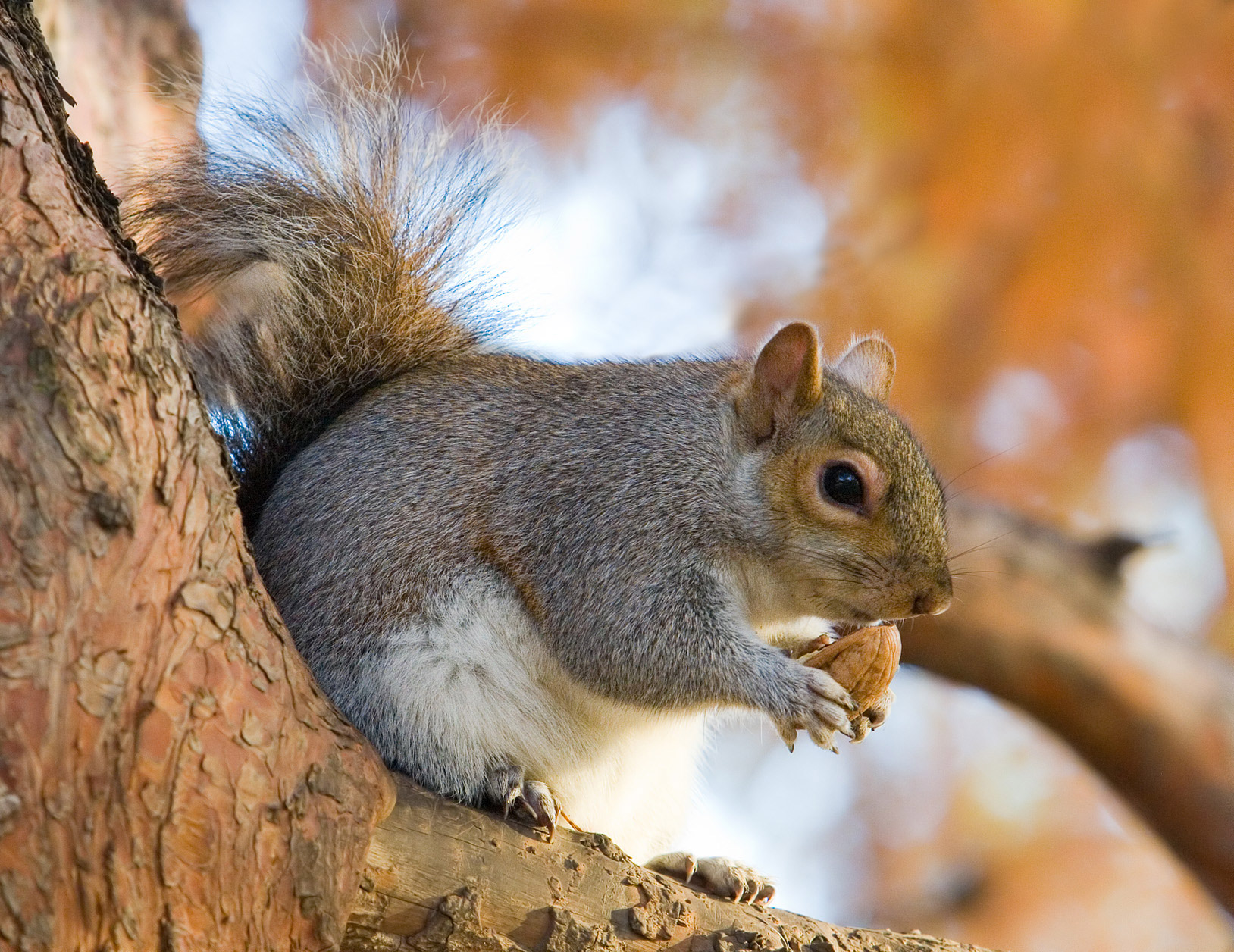
I love squirrels.

I realize that I am in the minority of the population with this, as they rummage through planters, dig holes in the middle of your lawn, and potentially drive your pets (dogs, cats, iguanas, etc.) berserk with their romping and their erratic tail-flipping.

But just take a moment to consider the life of a squirrel. A squirrel's average life span is six years (source), and so they've got jam pack their lives with food and fun (and probably work on that whole continuation-of-the-species schtick, but that's beside the point).

Now, squirrels can't eat cellulose (i.e., the green in plant leaves), and need food full of protein, fat, and carbs (just like us, unless you're on Atkins) (source). Squirrels spend the summer months storing food so they can survive the winter, burying several sources of food--among them, the acorn.

Why's the acorn so great? As any seed, it's high in protein, but it's also high in fat to help keep those little rodents warm through the winter. It's packed with all the good stuff squirrels need for endurance through the cold, winter months. An acorn has all the vital goodness a squirrels needs in order to be successful in its main purpose--survival.

And this relates to writing... How?

Image courtesy of Wiki Commons
Let's talk about the acorn as a story idea.

What's necessary in that little acorn to make a successful story? Well developed characters (the main building block, i.e., the protein) and a plot with continual rising tension (the slow-burning endurance, i.e., the fat).


This is getting a little foodie. Anyone else hungry?

This tiny little seed with a cute hat can sustain the squirrel for a long time. A good idea, rich with character and plotty goodness, can lead the writer to beautiful novel, short story, poem, or even song lyrics. The build blocks are there. It's up to the writer to use them.

Sure, writing takes so much more than the seed to be successful. It takes the endurance to get through the winter (drafting, editing, honing style, discovering voice) and the early spring (querying) to get to the beautiful summer. With that endurance, which can come with the writer's belief in the strength of that little acorn, and faith in one's self, we can all make it to summer.


What do you do with your acorns? Do you have an ideas file? A notebook in your back pocket? A hole in the tree in your backyard where you hide them?

PS--I am also taking suggestions for the letter D. Got any? Leave them below. Thanks!
Related Posts with Thumbnails